Organization
Ford
Client
Internal

Background
The future doesn't come with design patterns. At Ford, I worked on a team exploring what driving could become long before the technology reached production. My work centered on rapid experimentation, transforming emerging technologies into interactive prototypes that people could experience, evaluate, and react to. From autonomous vehicle passenger experiences to augmented reality navigation and conversational AI, each project asked the same question: How do you make unfamiliar technology feel intuitive, trustworthy, and human? Through research, storyboarding, interaction design, and hands-on prototyping, we used design as a tool for learning. Every prototype became a conversation with users, helping us uncover new behaviors, challenge assumptions, and shape future product direction before a single feature reached production. This work informed how Ford explored next-generation mobility experiences while giving engineering and leadership tangible ways to evaluate what the future could feel like.
My Role
As part of Ford's Human Machine Interface team, I collaborated with designers, engineers, researchers, and product leaders to imagine and prototype future mobility experiences.
I contributed across the full concept development process:
Conducted exploratory research and usability studies with 500+ participants
Designed interaction models, user flows, and interface concepts
Built high-fidelity interactive prototypes for user testing and executive demonstrations
Created storyboards, journey maps, and experience narratives to communicate future-state concepts
Partnered closely with engineering teams to iterate on concepts based on technical feasibility and user feedback
Synthesized research findings into design recommendations that informed future product direction
Exploring how AR can make navigation easy to understand
I explored future navigation experiences for Ford's instrument cluster and center display, using motion and interaction design to communicate directions more naturally and reduce cognitive load. Building on existing research, I created animated concepts that established visual language, interaction patterns, and information hierarchy for future augmented reality navigation experiences.


Making in vehicle conversations feel more natural
Before conversational AI became mainstream, I explored how visual interfaces could support voice interactions inside the vehicle. Rather than focusing only on voice commands, I designed animated conversation states that helped drivers understand what the assistant was doing, what it heard, and what would happen next. The work explored how motion, timing, and visual feedback could make voice interactions feel more intuitive and trustworthy.
Designing experiences for a future of autonomous mobility
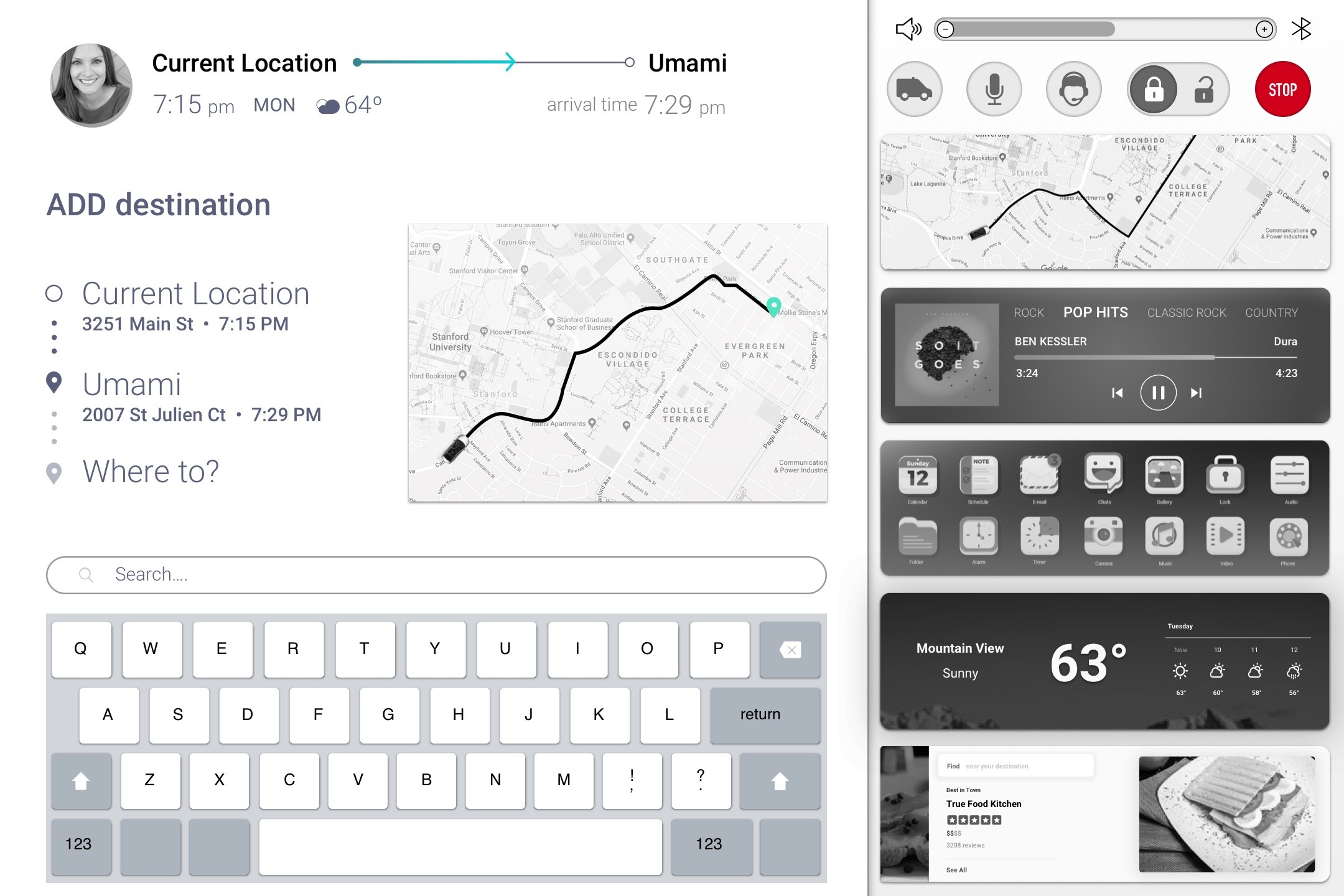
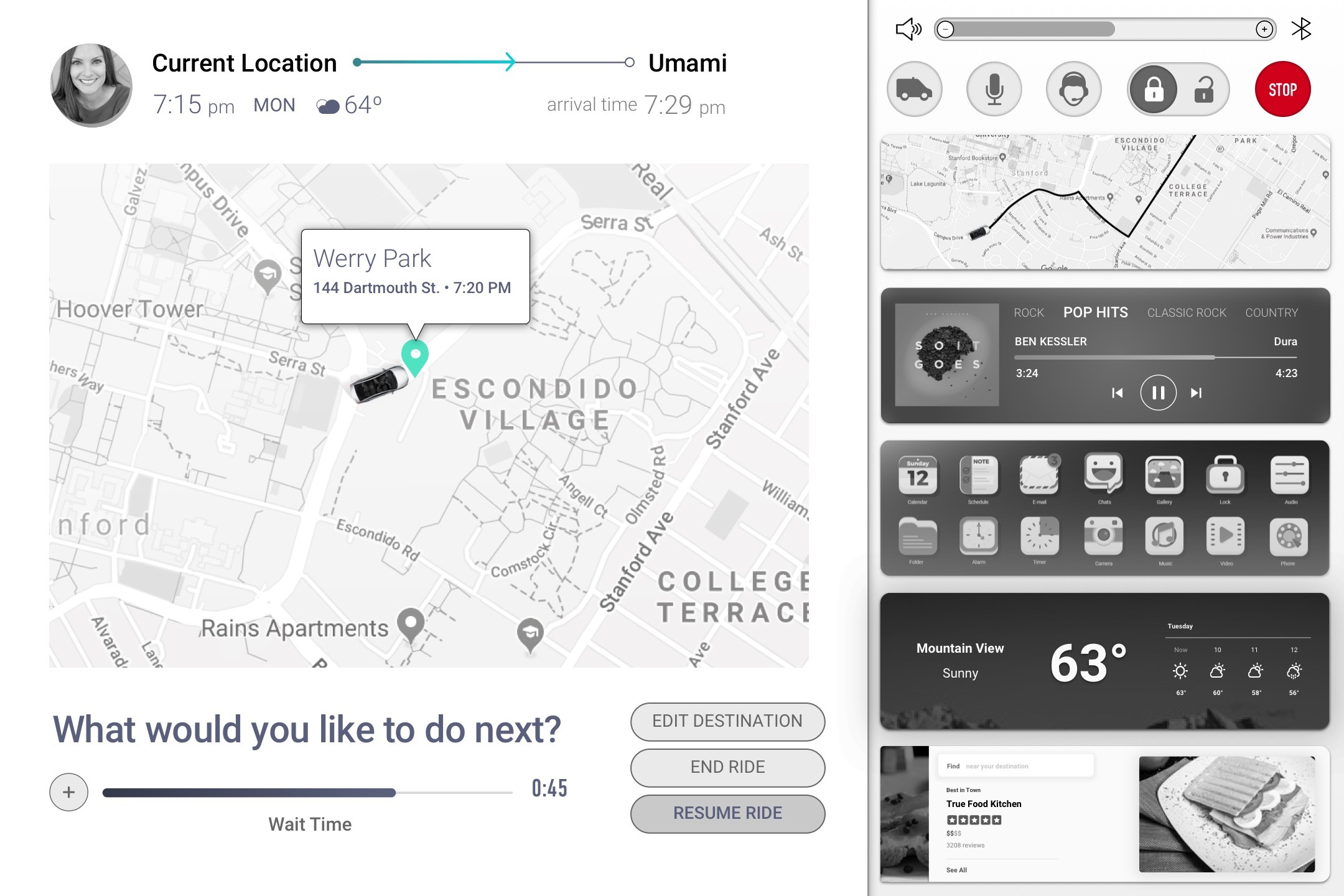
As autonomous vehicles shift people from drivers to passengers, the experience inside the vehicle becomes just as important as the technology itself. I designed interaction concepts and research prototypes that explored how people navigate, personalize, and build trust in a Level 4 autonomous vehicle. Working within Ford's In-Vehicle HMI team, I translated emerging interaction patterns into clickable prototypes used in moderated research clinics to inform future production concepts.