Organization
General Motors
Client
Utah Department of Transportation
Background
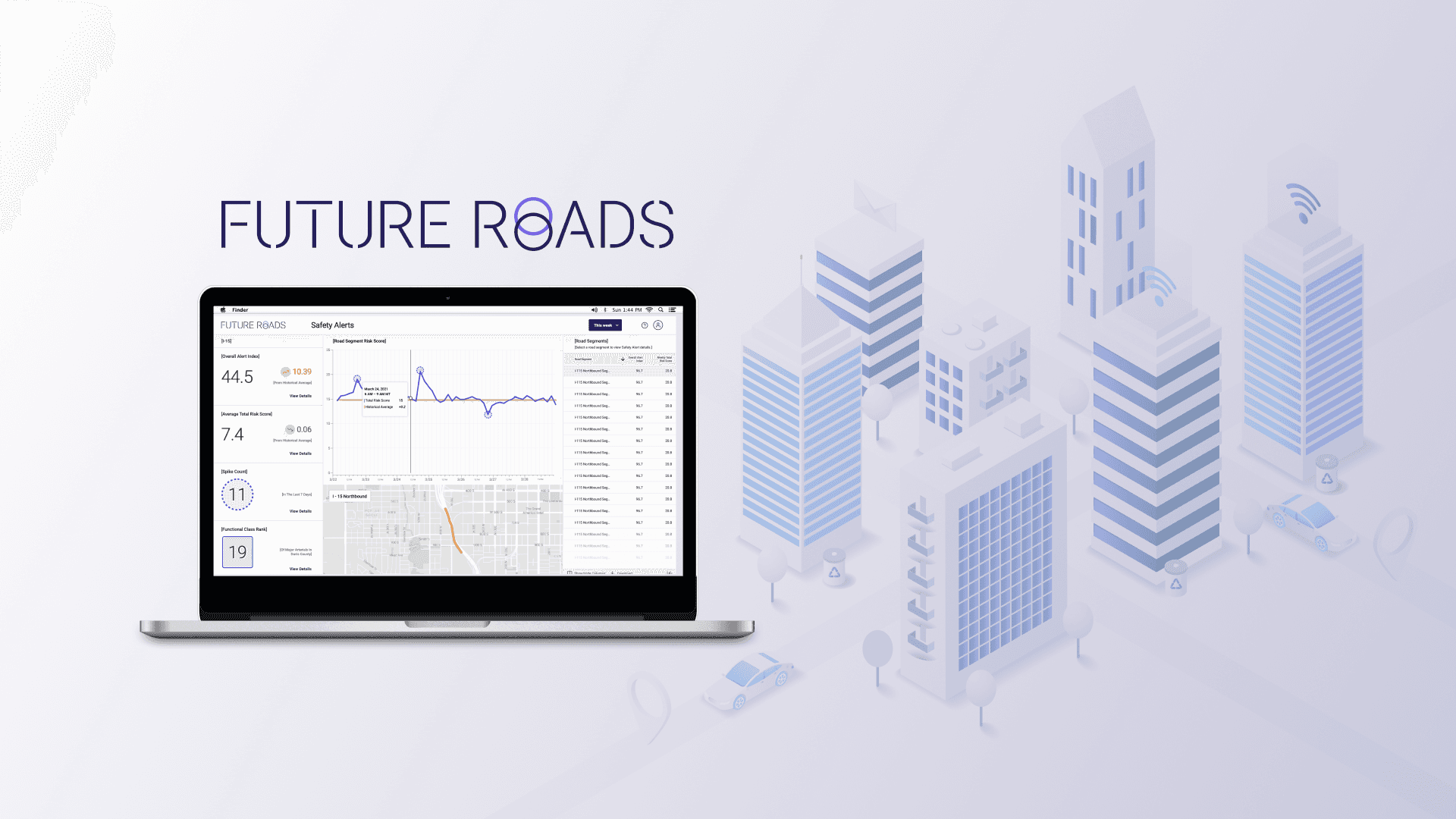
Future Roads started as an exploration into how connected vehicle data could improve road safety. GM had access to an enormous volume of sensor data—speed changes, hard braking, traction loss, and more. The question wasn’t whether the data was valuable. It was: How do we make it usable for the people responsible for keeping roads safe? We partnered with the Utah Department of Transportation to explore this opportunity, focusing on how transportation agencies could use connected vehicle data to better understand and prevent crashes. This work ultimately contributed to what later became Safety View by GM Future Roads & INRIX, a national safety analytics platform.
Challenge
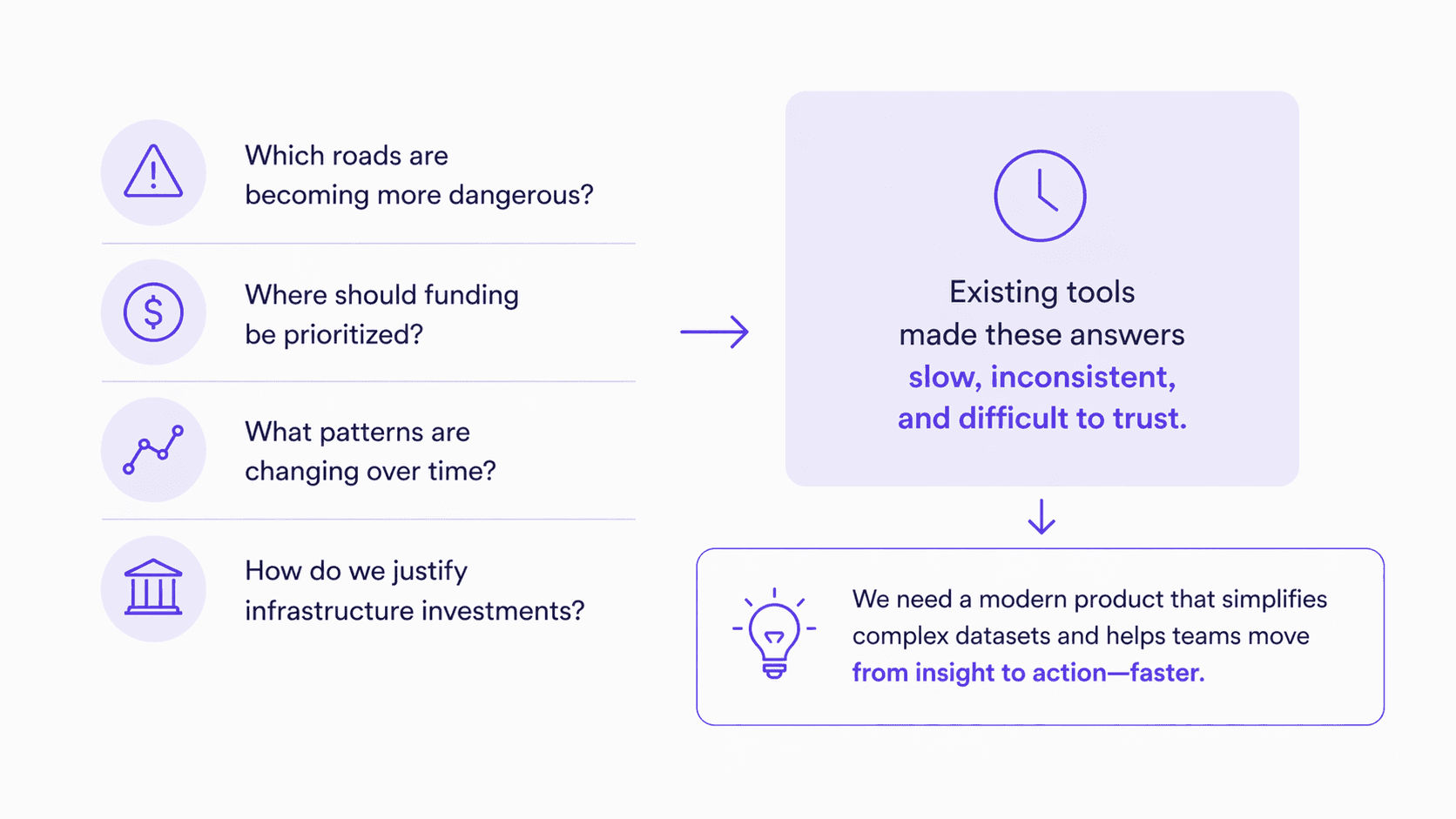
Transportation agencies weren’t lacking data—they were overwhelmed by it.
Safety decisions relied on:
outdated crash reports
disconnected tools and systems
manual workflows across teams
inconsistent data sources
Understanding why crashes were happening required stitching together information from dozens of places…if it was possible at all.
At the same time, the ecosystem itself was complex:
multiple agencies and stakeholders
rigid government standards
data privacy concerns
varying levels of tech maturity across cities
The real challenge wasn’t just usability. It was navigating an entire system that wasn’t designed to work together.
My role
I focused on UX and UI design, working closely with a UX research lead and a highly cross-functional team including product, data science, engineering, and R&D.
My work included:
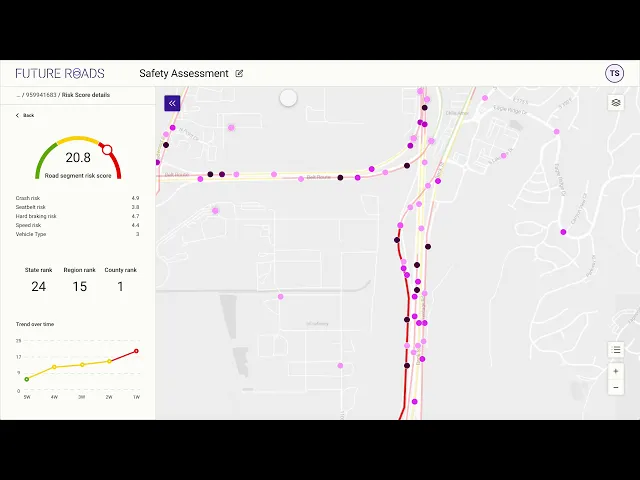
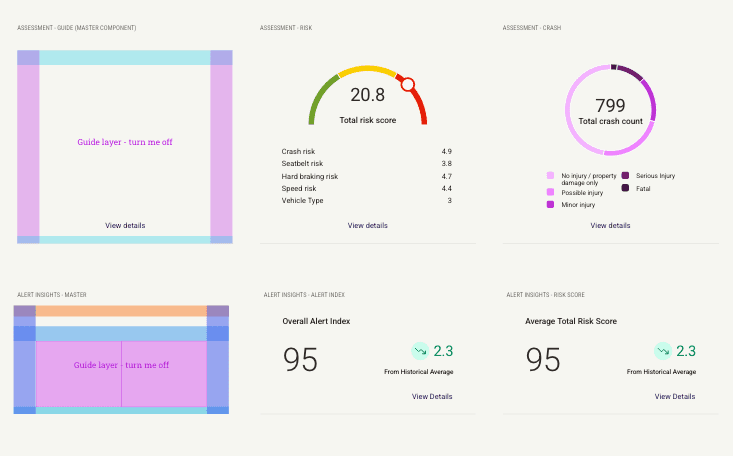
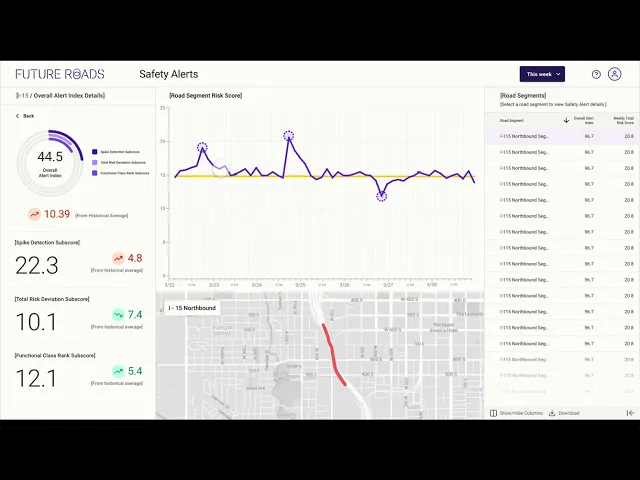
Designing dashboards, map-based tools, and reporting workflows
Translating complex datasets into clear, usable interfaces
Supporting product definition through wireframes and flows
Developing a scalable, accessible component system (WCAG / USWDS aligned)
Contributing to MVP definition and feature prioritization
Users we designed for
This was a deeply exploratory project that moved from technical discovery to concept validation to MVP definition.
Understanding the Technology
We started by working closely with R&D and data science teams to understand what connected vehicle data could actually do.
There was a lot of technical potential but it wasn’t yet clear:
who the product was for
what problems we should prioritize
how to translate raw signals into meaningful insights
One thing was clear early on: we would need to isolate what data actually mattered to users.
Understanding the Ecosystem
We zoomed out before designing anything.
Through market research, SME interviews, and ecosystem mapping, we learned:
cities operate at very different levels of technical maturity
data access is a major pain point—but so is adoption
safety is the primary driver for funding and innovation
relationships between agencies, vendors, and systems are just as important as the data itself
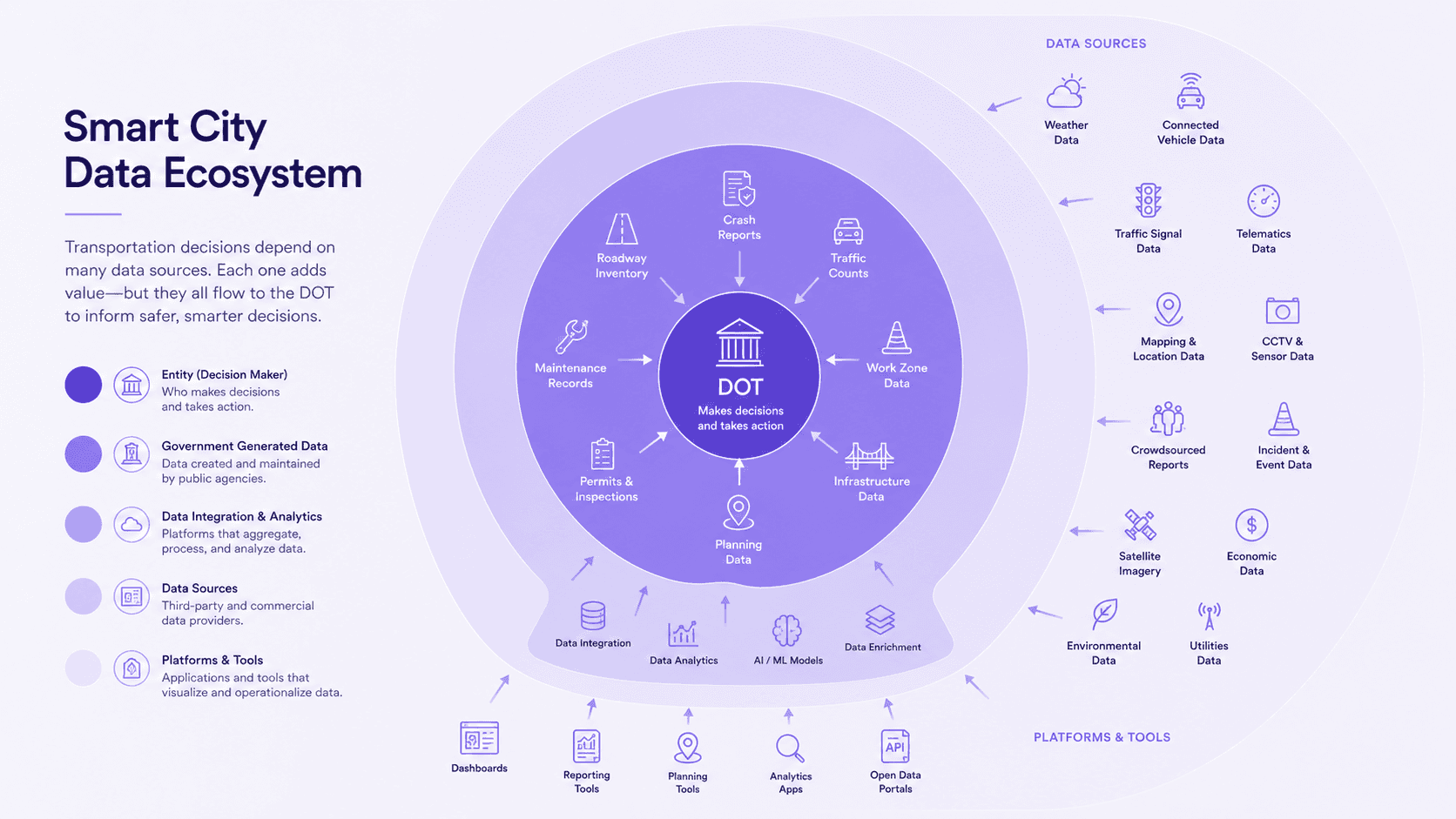
We mapped the Smart City data ecosystem to understand where Future Roads could realistically fit and where it couldn’t.
Understanding the People
We conducted user interviews and contextual inquiry with transportation professionals.
What we found:
workflows were fragmented across multiple tools
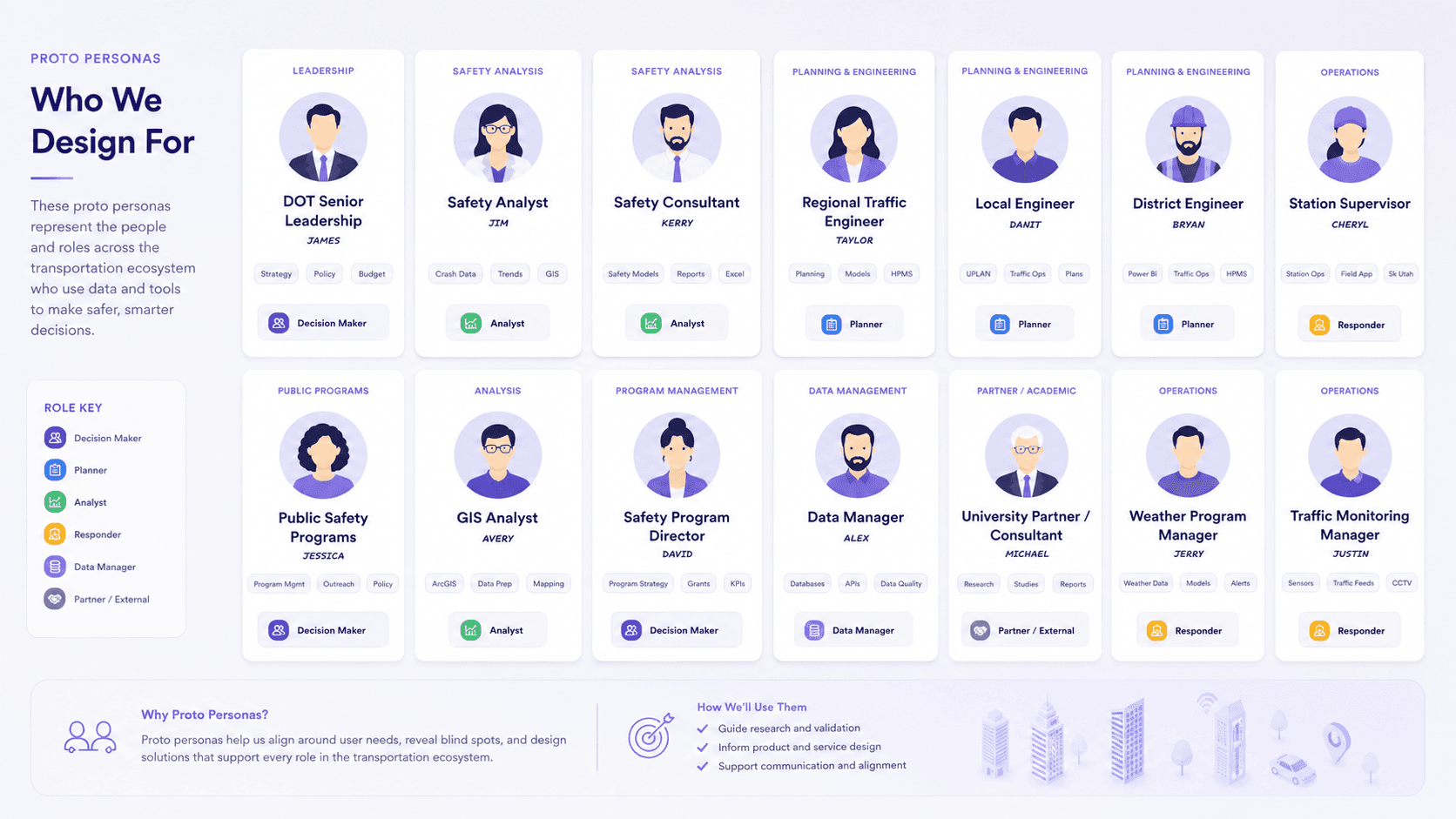
there were at least 16 distinct roles involved in safety decisions
users had to manually piece together insights
the process of identifying and fixing a safety issue was long and collaborative
We developed proto-personas and mapped how each role interacted with data, tools, and each other.
Exploring the Solution
We ran a 4-day design sprint to align the team and explore possible directions.
Together, we:
defined a long-term vision
identified the highest-priority pain points
developed early concepts to test with users
From there, we moved into concept validation with UDOT.
What we learned from the design sprint
A few things fundamentally shifted how we approached the product:
Data alone isn’t enough
Users needed context, not just signals. Without it, the data wasn’t actionable.
Integration matters—but isn’t always visible
Leadership cared deeply about system integration. End users cared more about getting answers quickly.
Users shouldn’t have to hunt for problems
Early concepts required users to decide where to look. They needed guidance toward high-risk areas.
The ecosystem is bigger than the product
We weren’t replacing existing systems—we were becoming one part of a much larger landscape.
More data > more features
Users consistently prioritized access to better data over feature-heavy tools.
Design & testing
Early Exploration → Wireframes
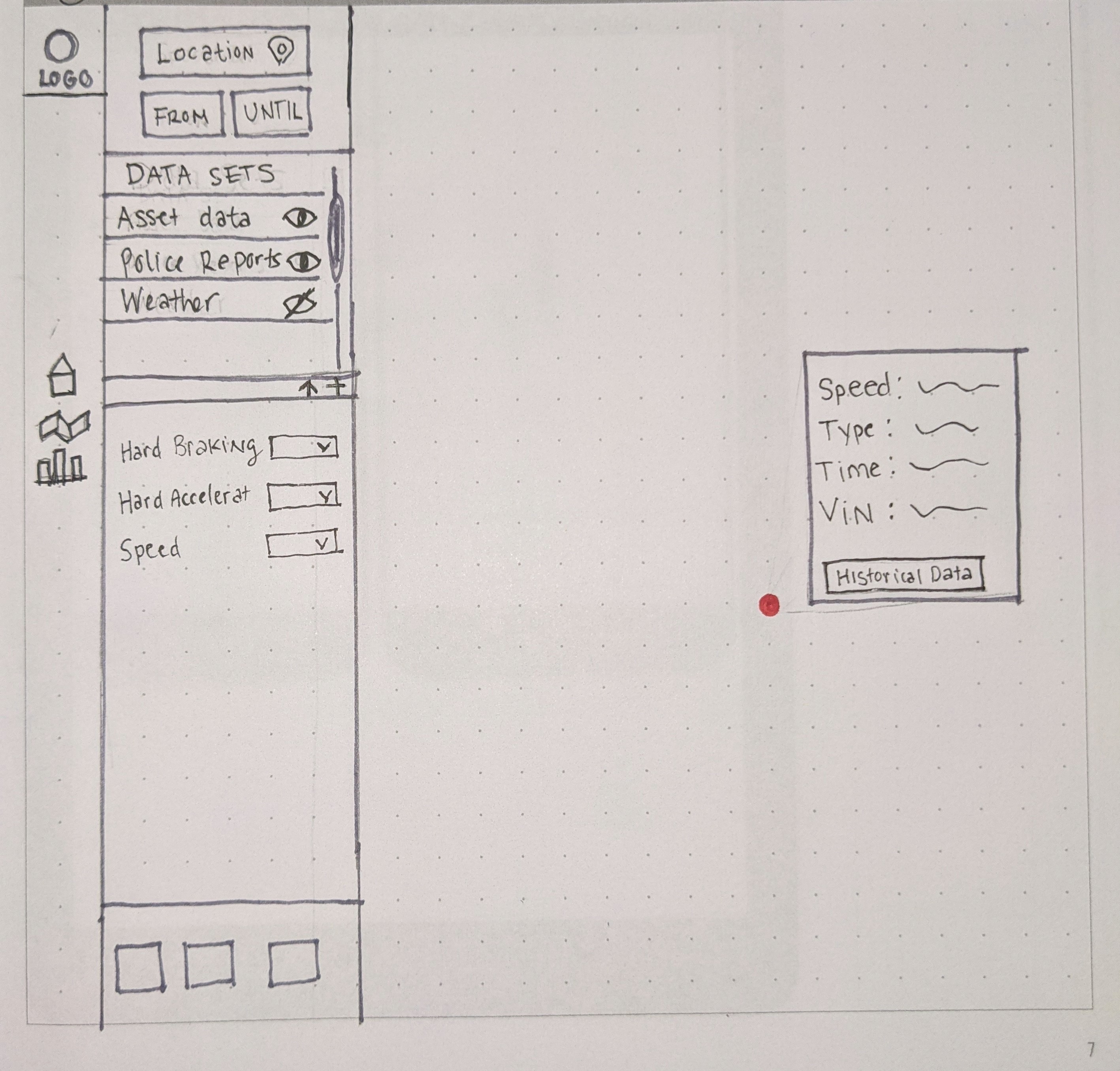
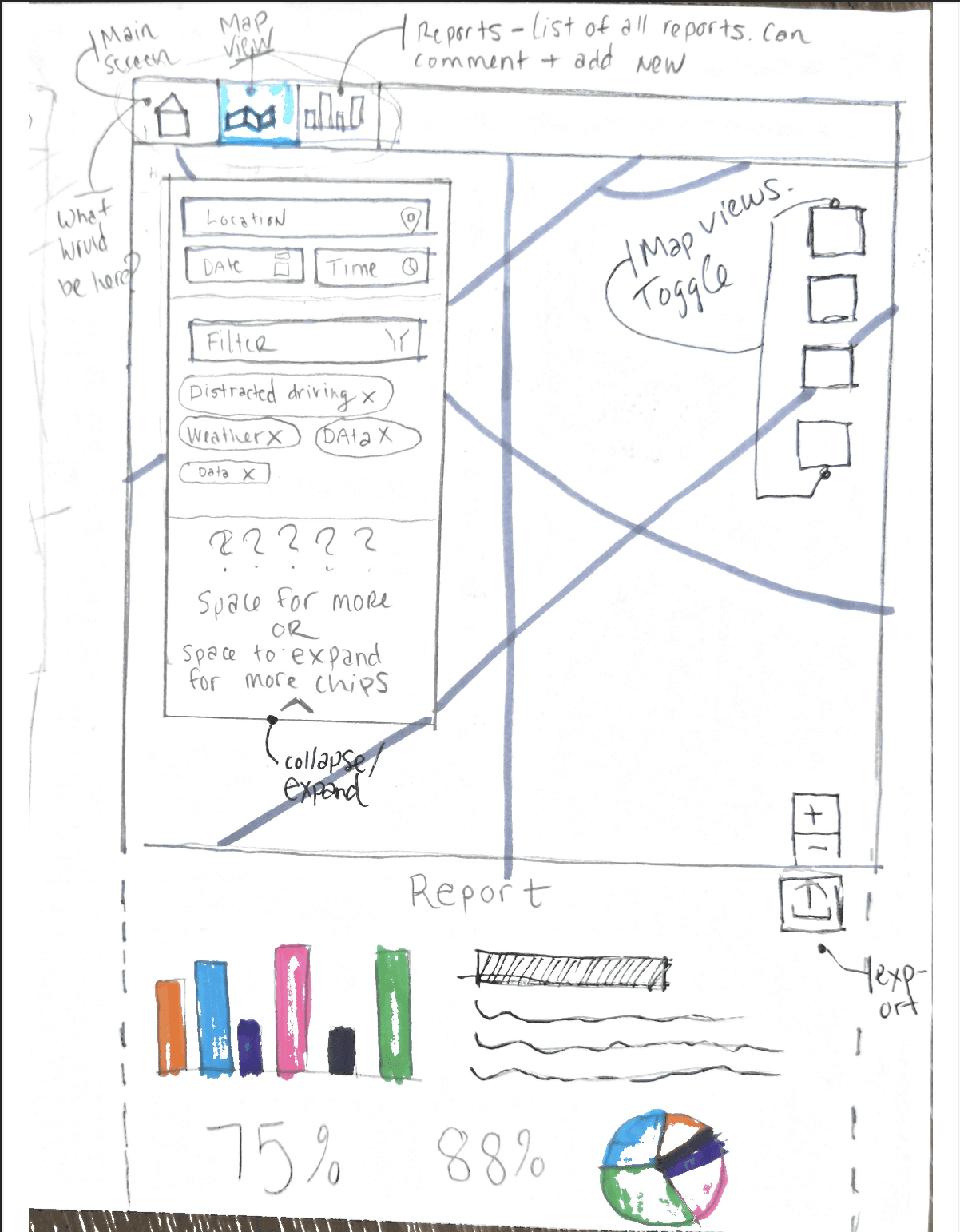
We started by translating ideas into structure.
Early work focused on:
layout hierarchy (map vs data vs controls)
how to organize dense information
defining core user flows
V1 Concepts (Initial Direction)
From the design sprint, we developed initial concepts to test.
These concepts explored:
map-first experiences
dashboard summaries
workflow-heavy interactions
Testing revealed:
too much emphasis on workflow and integration
not enough clarity in the data
users had to interpret too much on their own
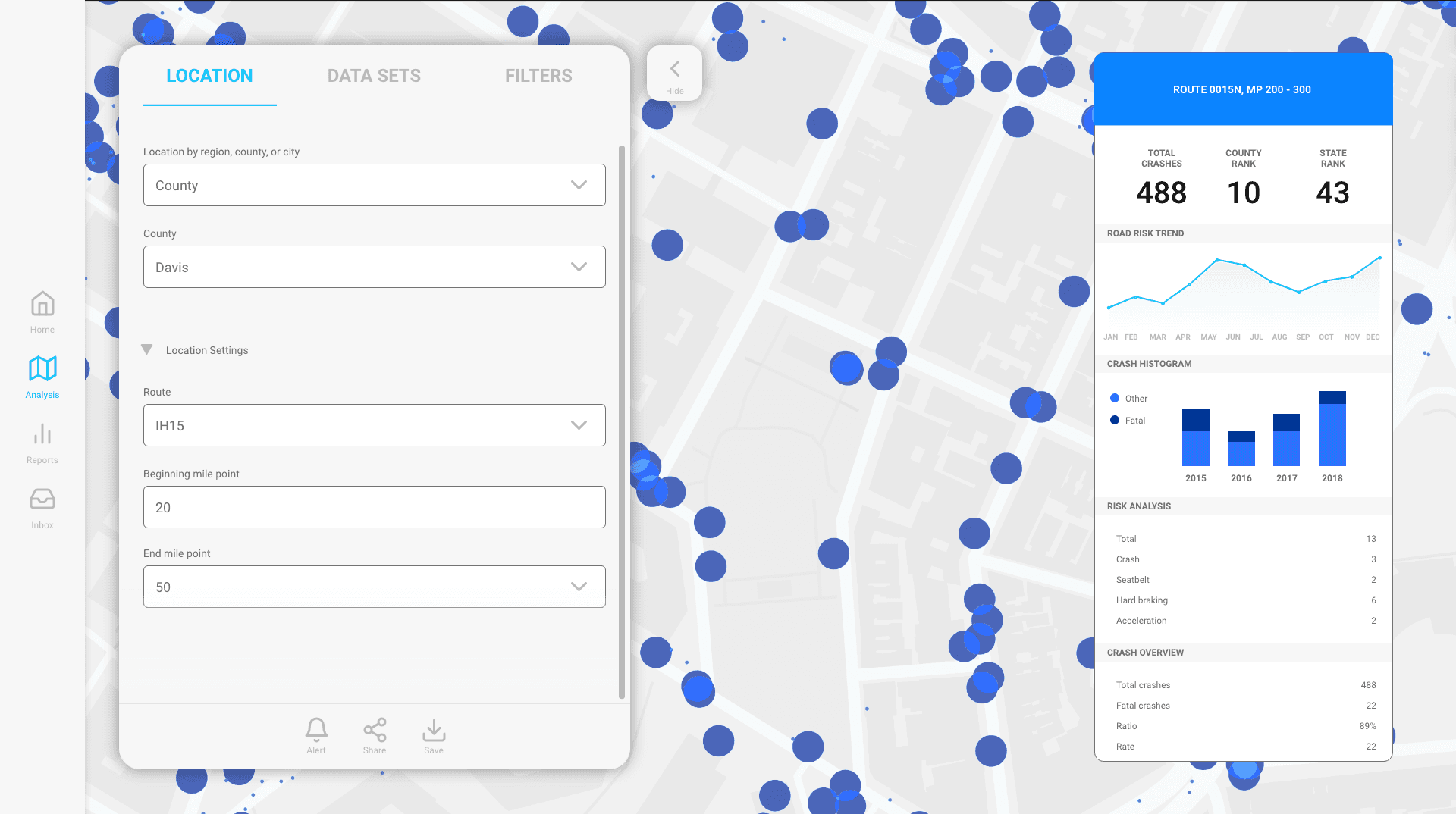
V2 Concepts (Refinement + Direction Shift)
We iterated based on testing and shifted toward clarity and guidance.
We improved:
visual hierarchy
data storytelling
how insights were surfaced
guided exploration vs open exploration
This is where the product started to feel usable.
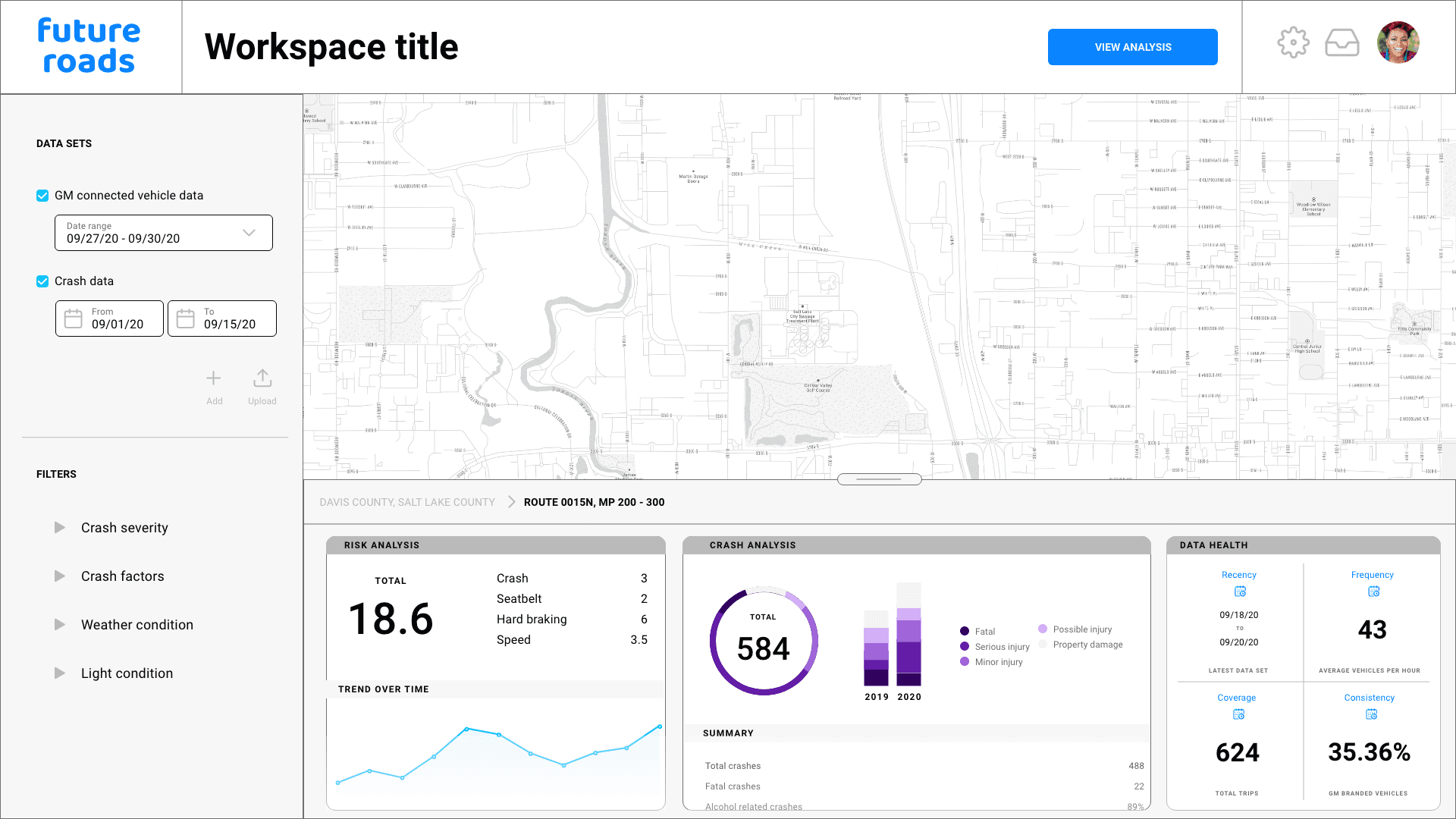
Final Design Direction
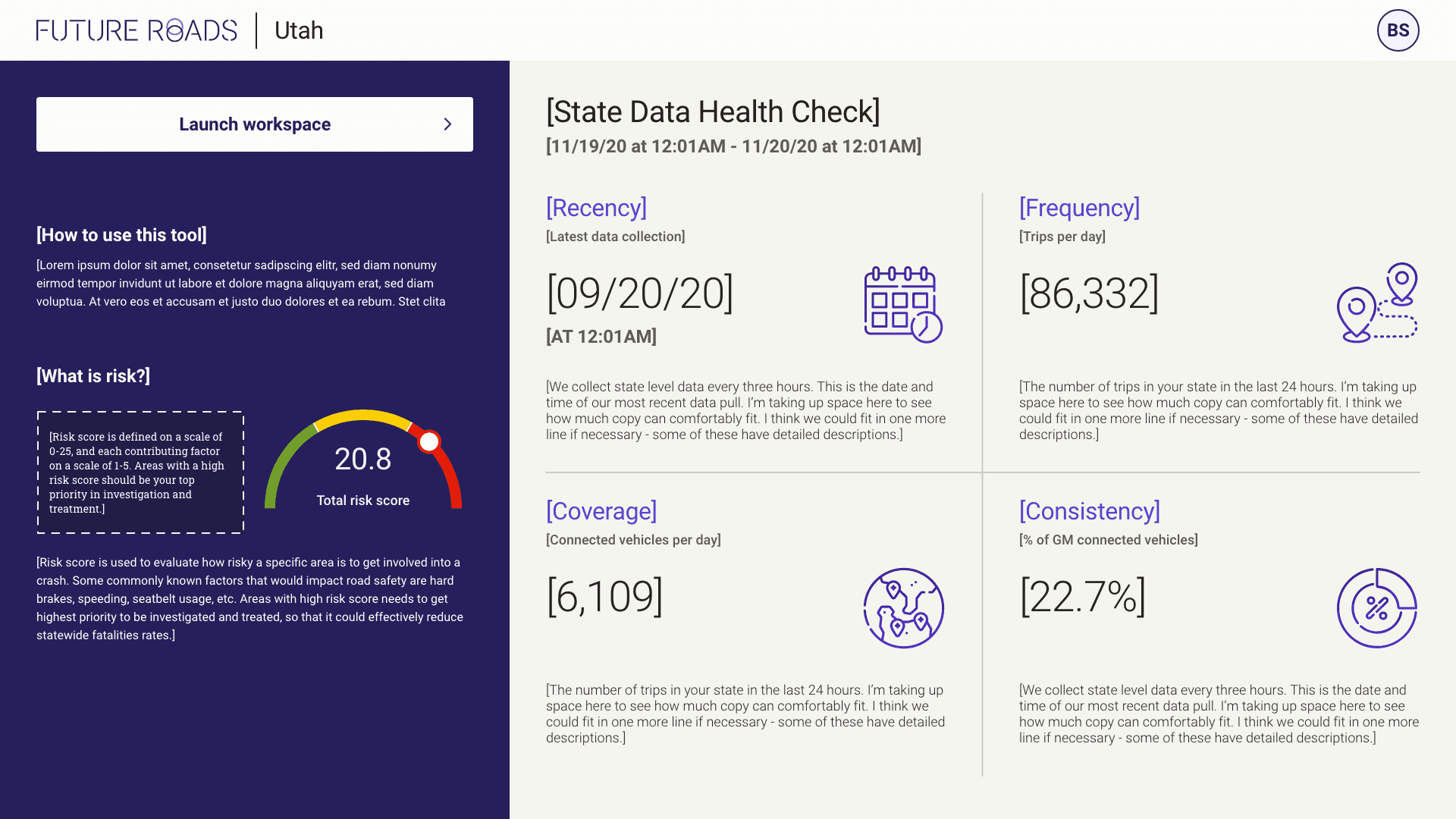
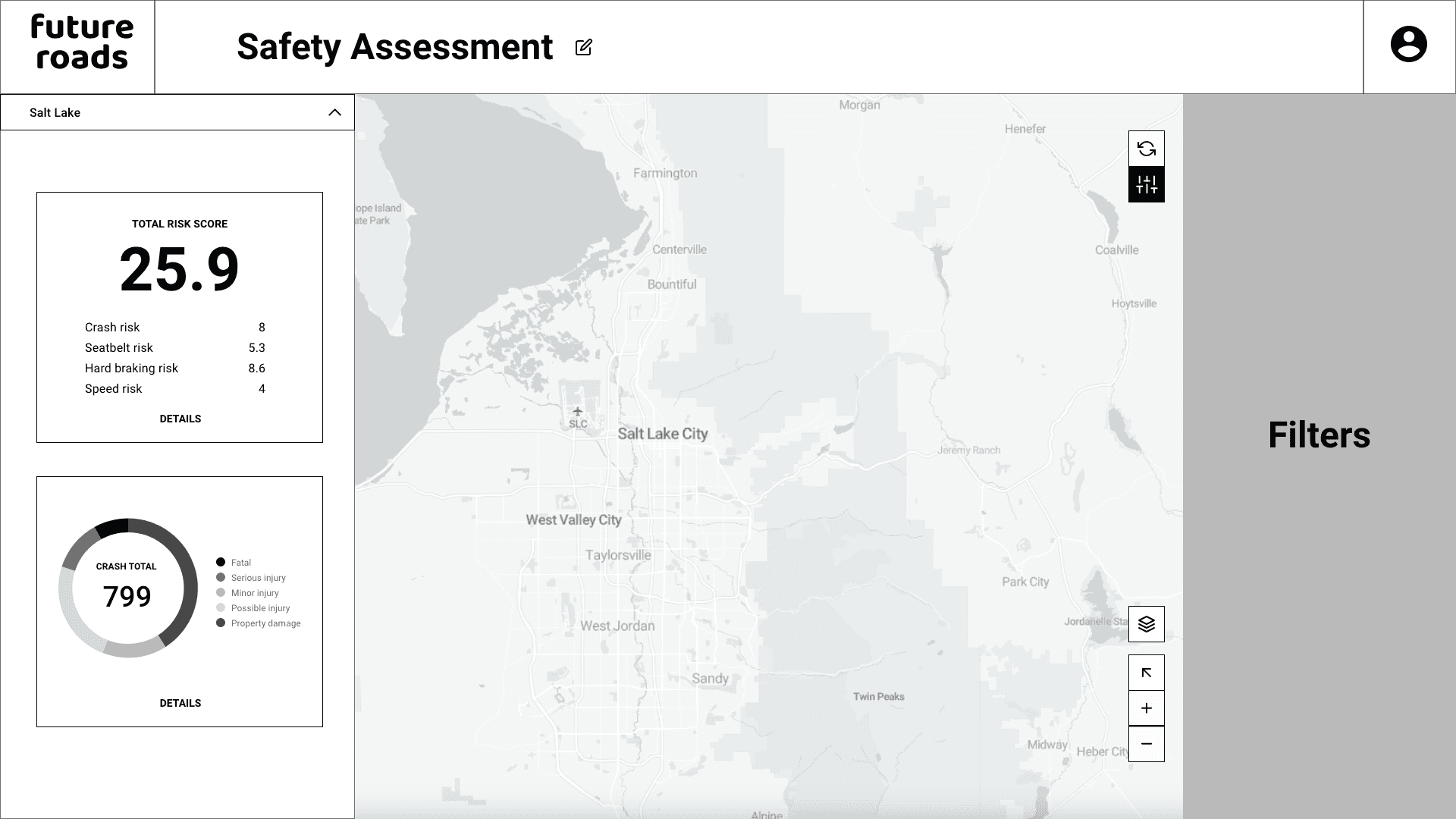
From there, we defined the MVP and moved into high-fidelity design.
Key elements included:
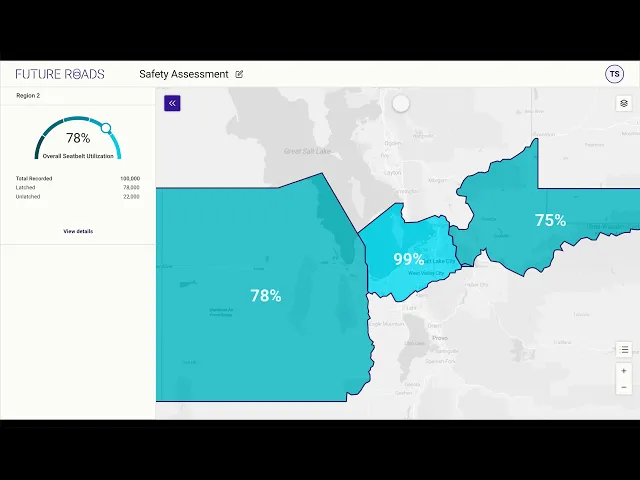
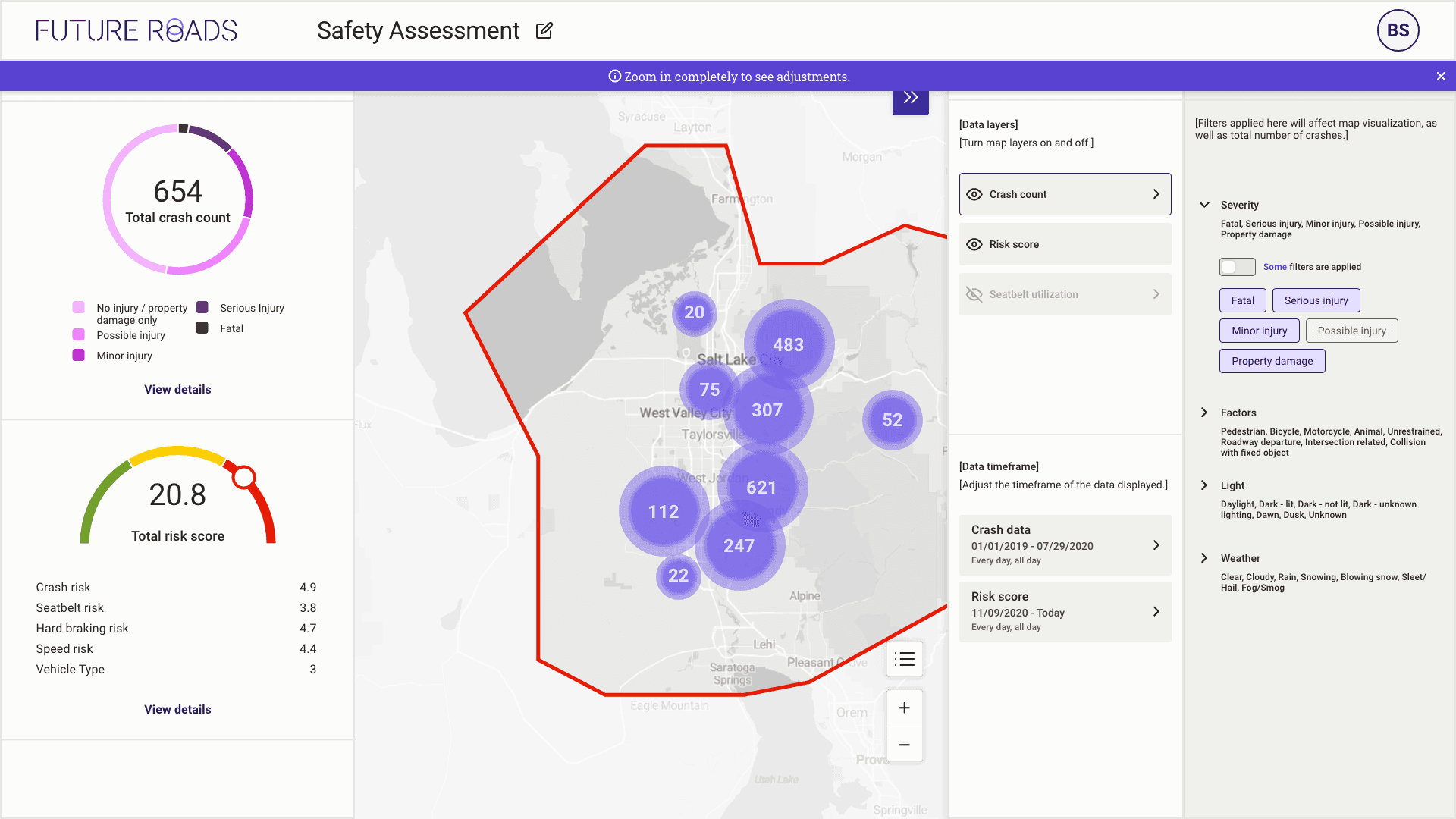
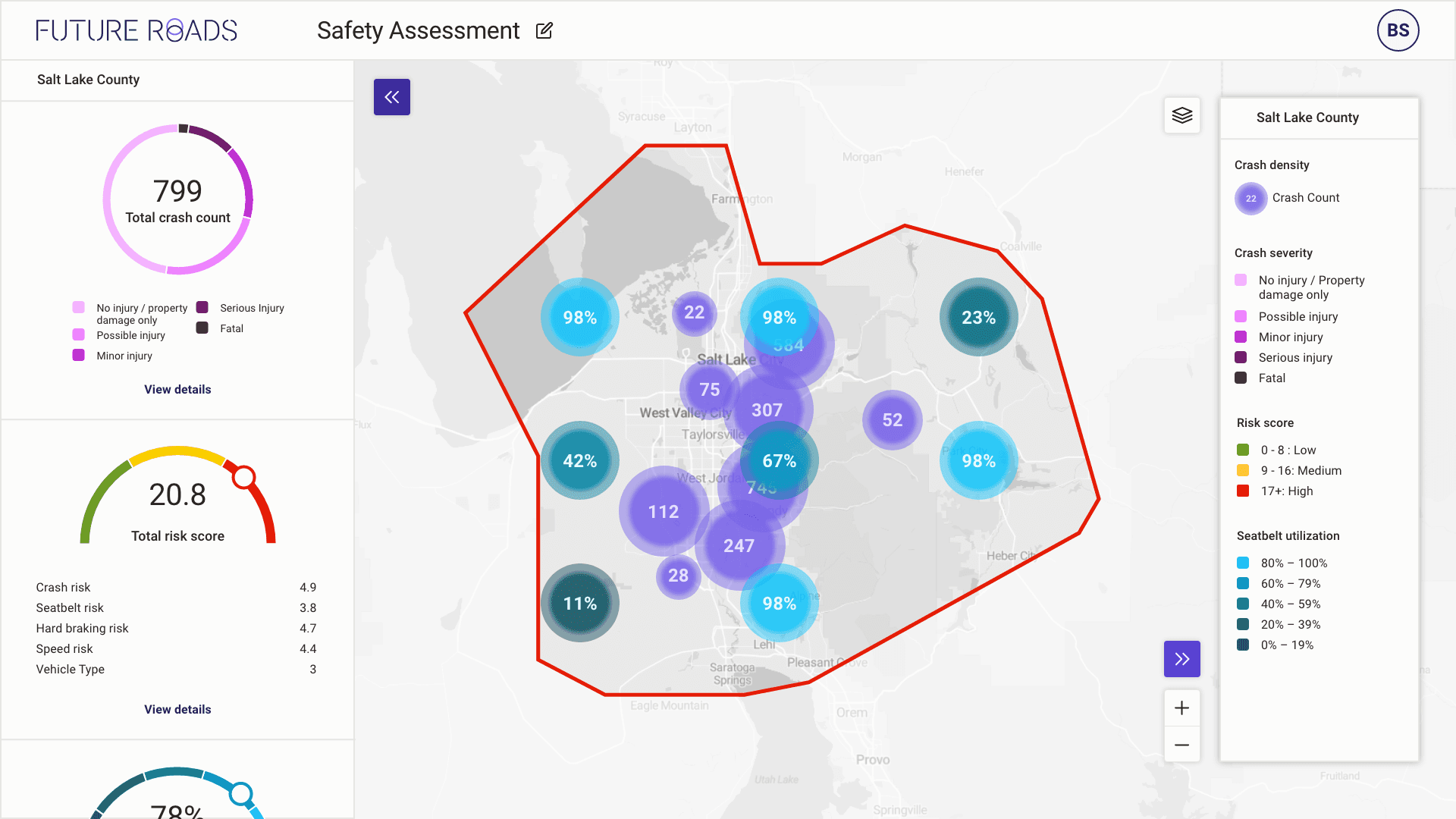
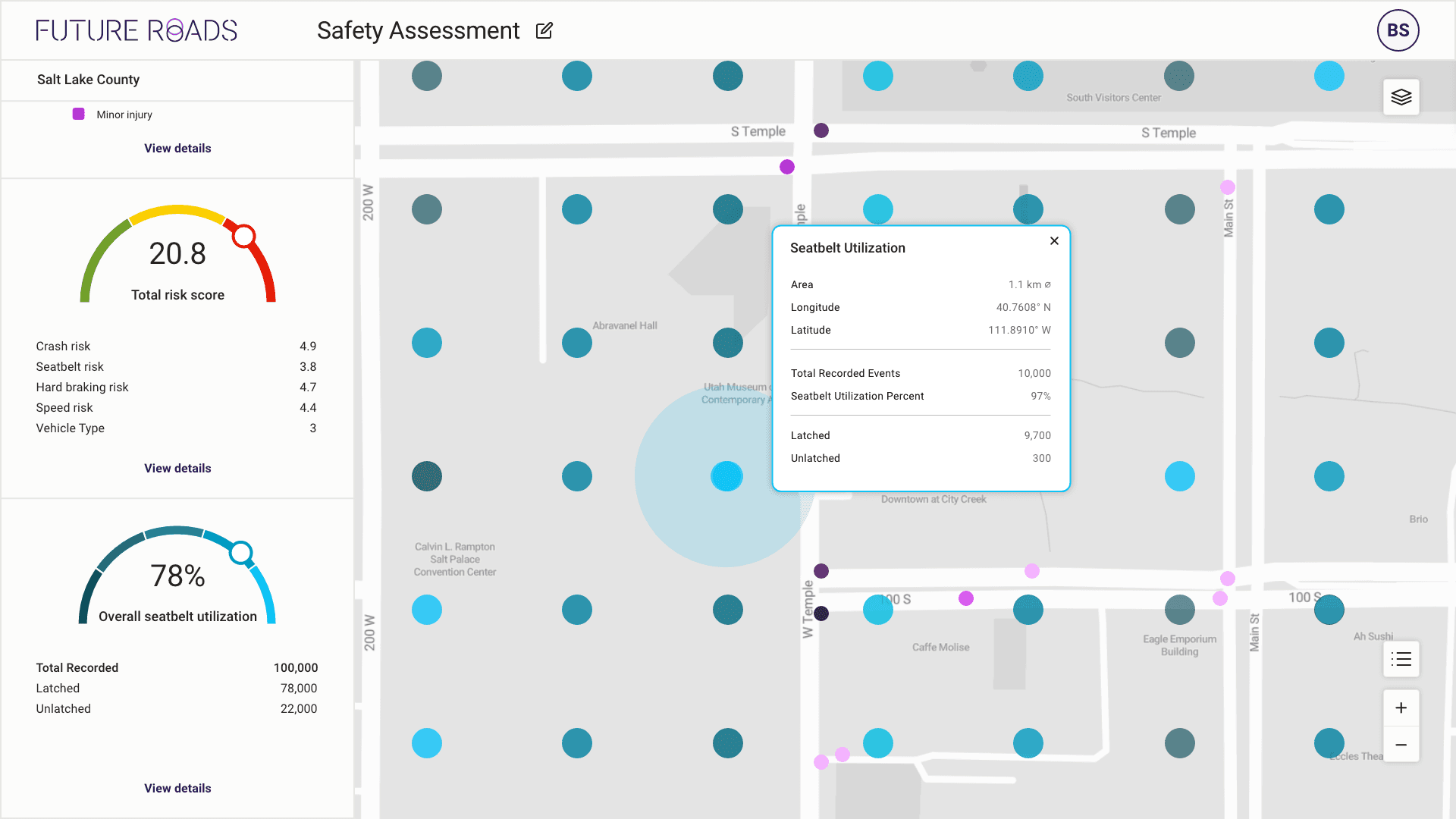
map-based exploration as the core experience
dashboards for quick understanding
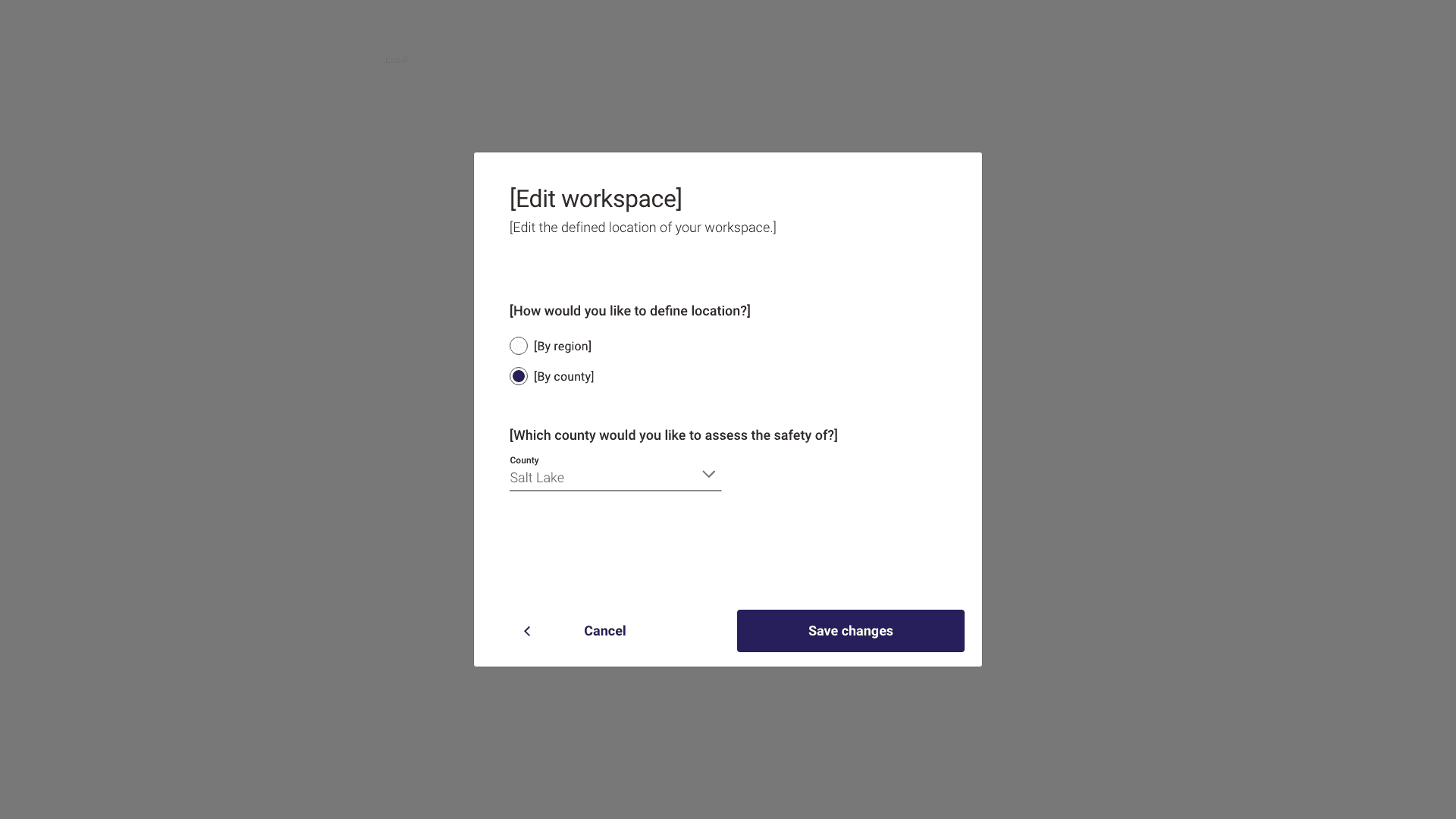
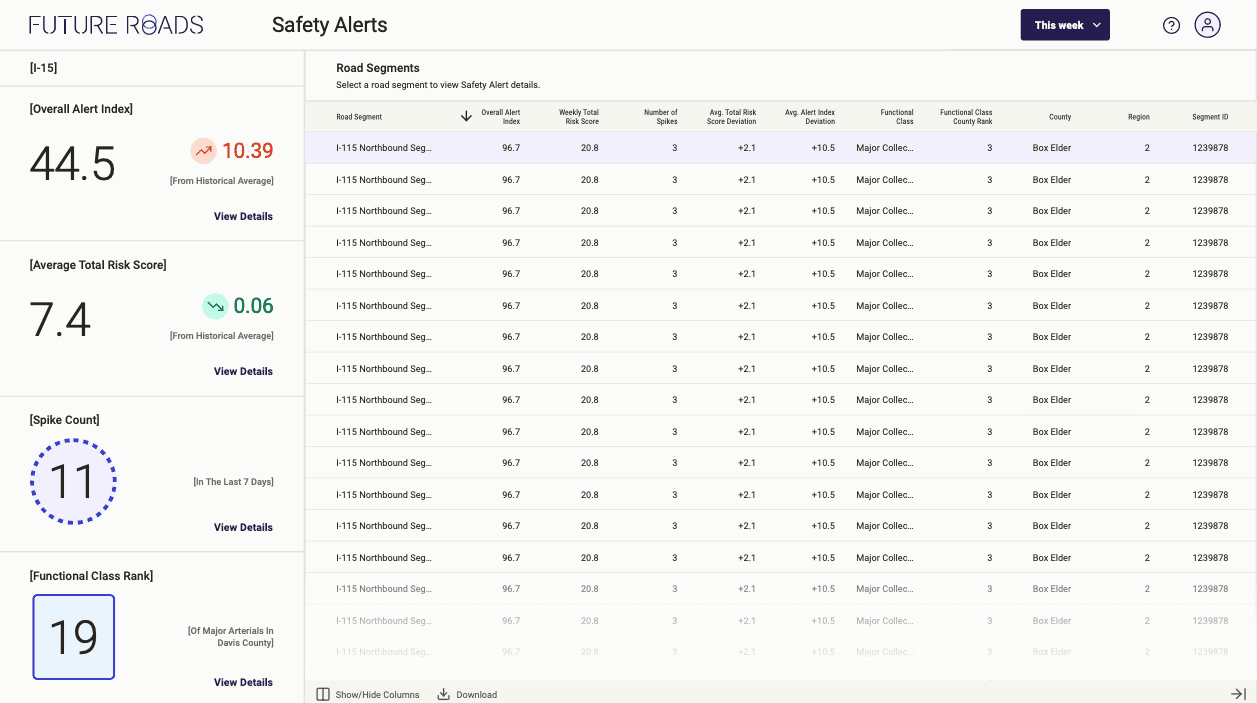
filtering systems for complex datasets
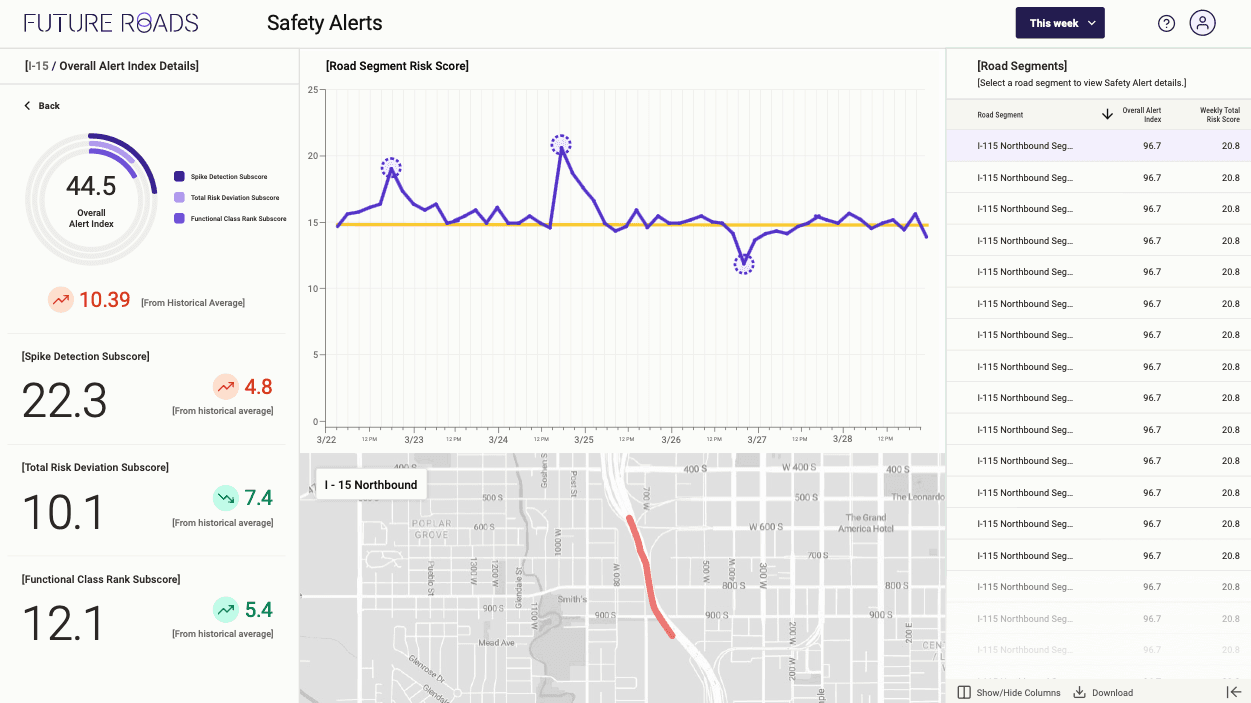
drill-down interactions from summary → detail
flexible tables for deeper analysis
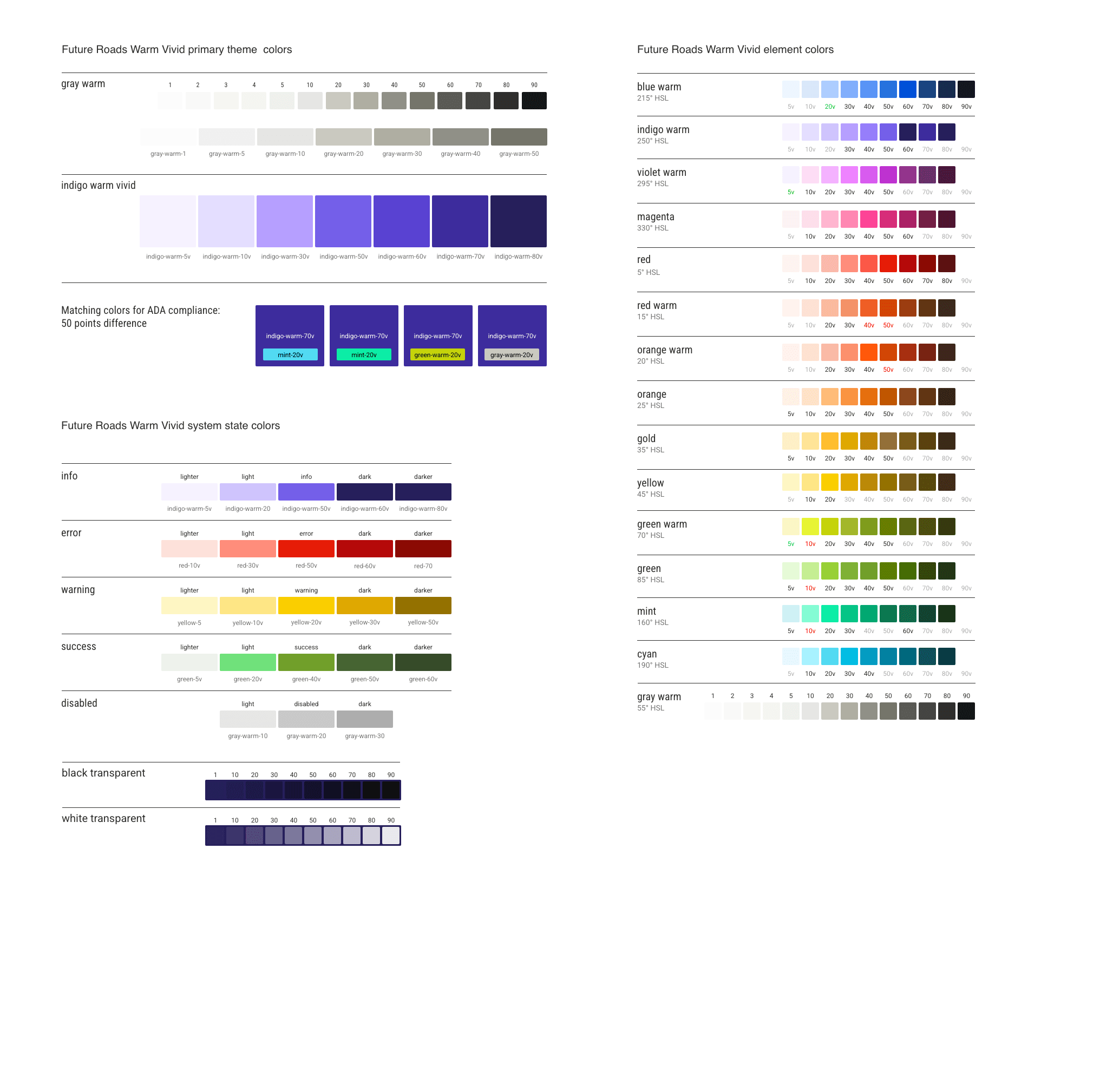
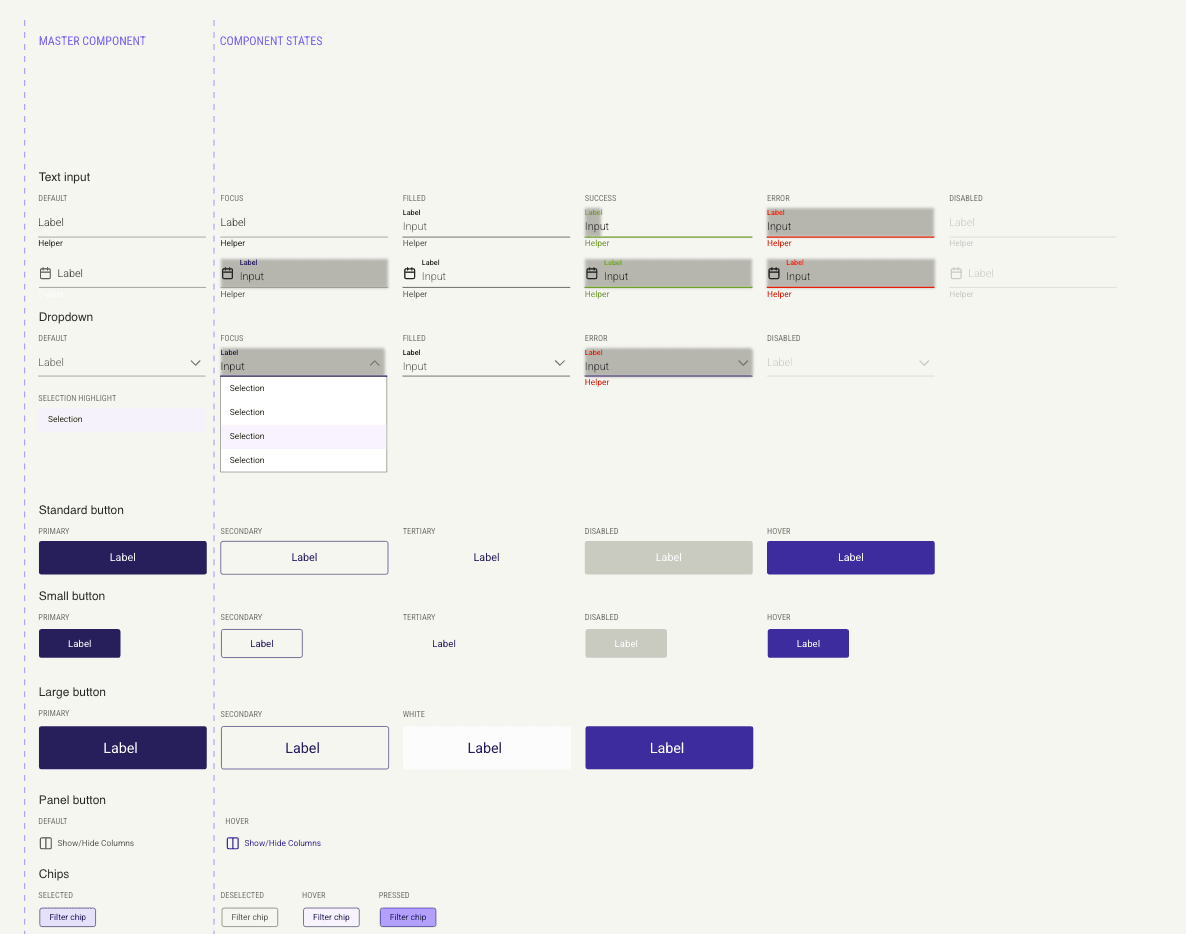
I also developed a scalable, accessible component system to support long-term growth.
Outcome
Future Roads later launched publicly as Safety View by GM Future Roads & INRIX, a nationwide, cloud-based safety analytics platform for transportation agencies.
The platform combined connected vehicle, crash, and contextual data to help agencies:
identify hazardous road segments
prioritize safety investments
evaluate Vision Zero initiatives
support funding and grant applications
make faster, data-informed decisions
What began as an exploratory concept evolved into a real-world product designed to improve roadway safety at scale.