Preventing Crashes Using Data From 15M Vehicles
Organization
General Motors
Client
Utah Department of Transportation
Timeline
March 2020 - July 2021
Role
UX Design + UI Design
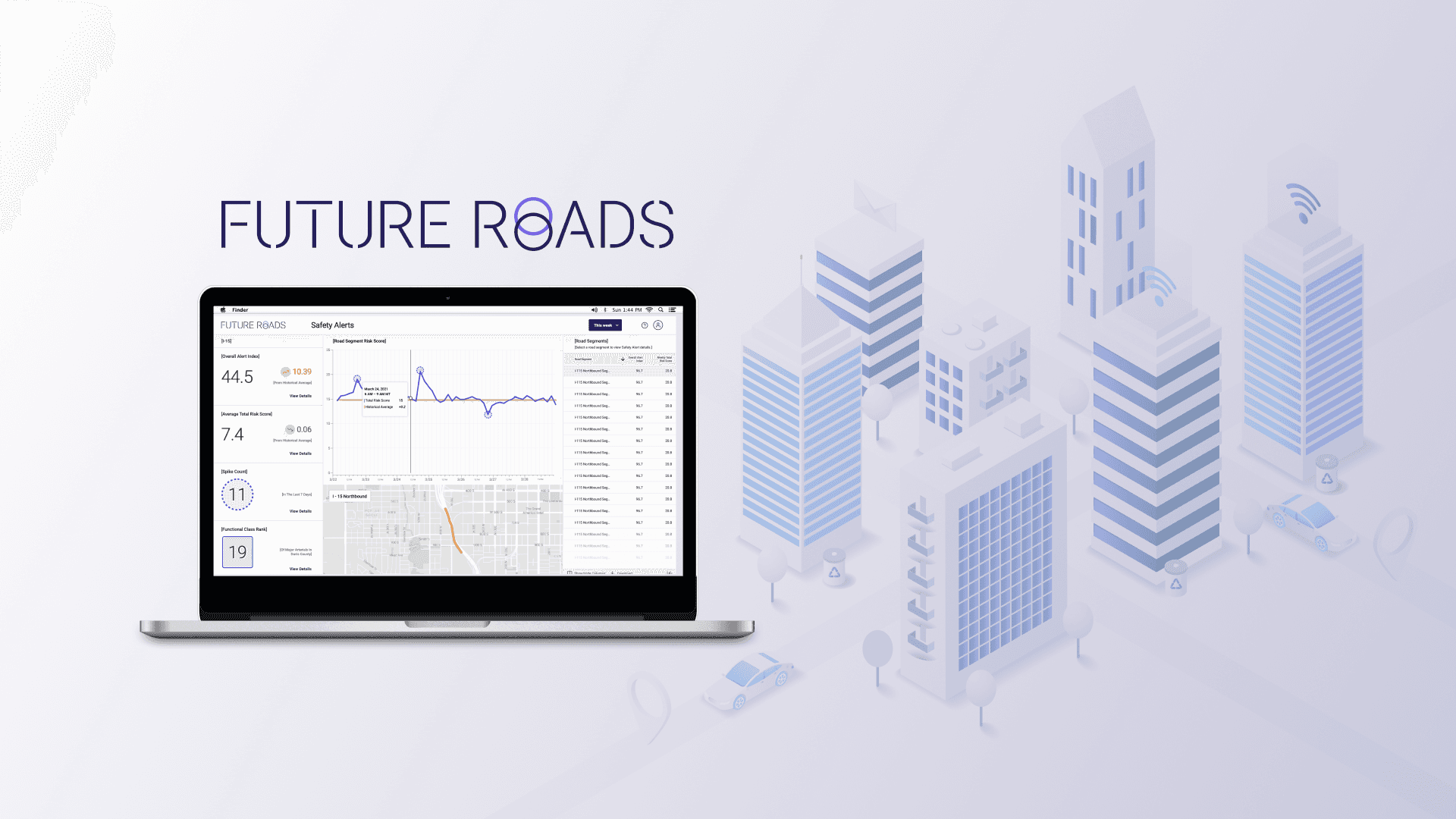
Could connected vehicles tell us where a road was dangerous before someone crashed?
I helped turn an emerging source of connected-vehicle data into a new kind of roadway safety product, moving between research, product strategy, interaction design, prototyping, and testing from early exploration through beta.
Mandate
Turn connected-vehicle data into something transportation professionals could use to make better safety decisions.
Contribution
Research Strategy · Product Strategy · UX/UI · Prototyping · Testing
Outcome
2 beta products → nationwide roadway safety platform
THE SITUATION
Road safety decisions were looking backward.
Transportation agencies make high-stakes decisions about which roads need attention and where infrastructure dollars should go. But much of the available safety data described what had already happened, often after a crash occurred.
GM had access to something different: signals generated by connected vehicles.
Speed. Hard braking. Traffic patterns. Road conditions. Signals capturing what vehicles were experiencing in real time.
That created an interesting possibility:
Could we use what vehicles were already experiencing to help transportation agencies understand risk before another crash made it obvious?
But having the data didn't mean we knew what to build with it. The opportunity was still largely undefined.
WHAT I WALKED INTO
There was a lot of possibility, and very little definition.
Future Roads began as an R&D exploration, not a predefined product.
We were working at the intersection of connected-vehicle technology, massive datasets, transportation systems, government agencies, and an emerging smart-city landscape.
There wasn't a single workflow to improve or an existing product to redesign. We first had to understand the system around the opportunity and determine where connected-vehicle data could create meaningful value.
That gave us three big questions:
What could the technology tell us?
Where could it add something existing tools couldn't?
Who would actually use it, and what decisions could it help them make?

What we needed to learn
Before we could decide what to build, we needed to understand where connected-vehicle data could actually create value.
Our early discovery looked at the problem from three angles: what the technology could make possible, what already existed in the transportation ecosystem, and how different transportation professionals actually made roadway safety decisions.
I supported the broader discovery effort and focused most closely on translating what we learned about users into opportunities we could design and test.

understanding the landscape
We mapped the broader smart-city ecosystem and studied existing transportation and roadway-safety products to understand where Future Roads could fit.
Competitive analysis helped establish the baseline: what tools already enabled, where workflows overlapped, and where connected-vehicle intelligence could offer something meaningfully different.


text
understanding the people
User interviews brought the landscape down to the level of actual decisions.
We explored how transportation professionals identified safety problems, which data they relied on, where their workflows broke down, and how findings ultimately informed planning and investment.
The research revealed that “transportation professional” wasn't one user. People working with the same roadway data had very different responsibilities, levels of technical depth, and reasons for using it.
I helped translate those patterns into personas, organized across two dimensions: class, representing their relationship to the work, and function, representing what they needed to accomplish with the data.

from research to a bet
Four days to decide what was worth testing.
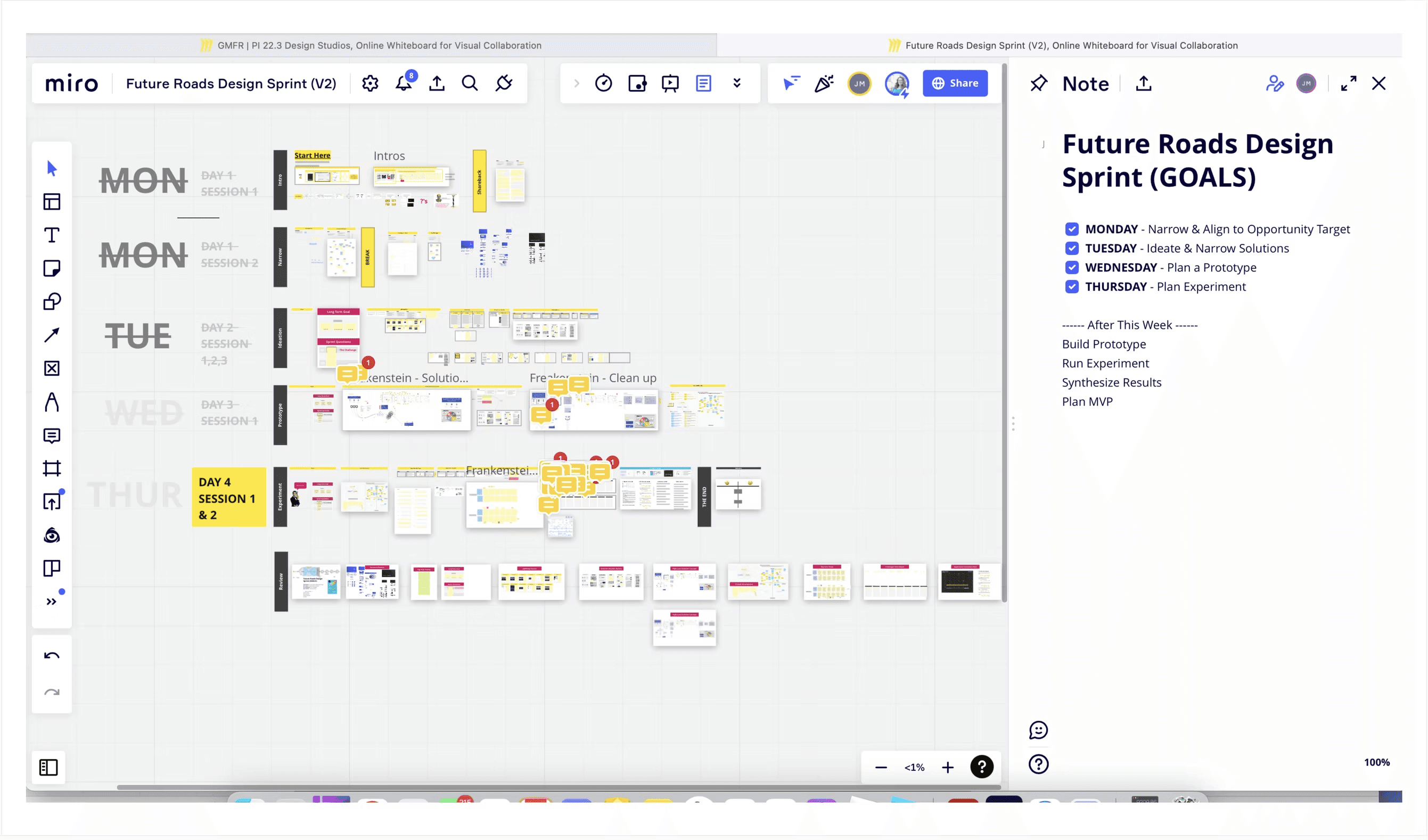
I planned and facilitated a four-day collaborative design sprint to turn what we'd learned into a product direction.
Together, the cross-functional team aligned on the long-term goal for Future Roads, prioritized the most important pain points, explored competing ideas, and converged on a concept we could test with users.
THE SPRINT GAVE US
A NORTH STAR: A shared vision for Future Roads.
A FOCUS: The problems worth solving first.
A BET: A concept concrete enough to test.
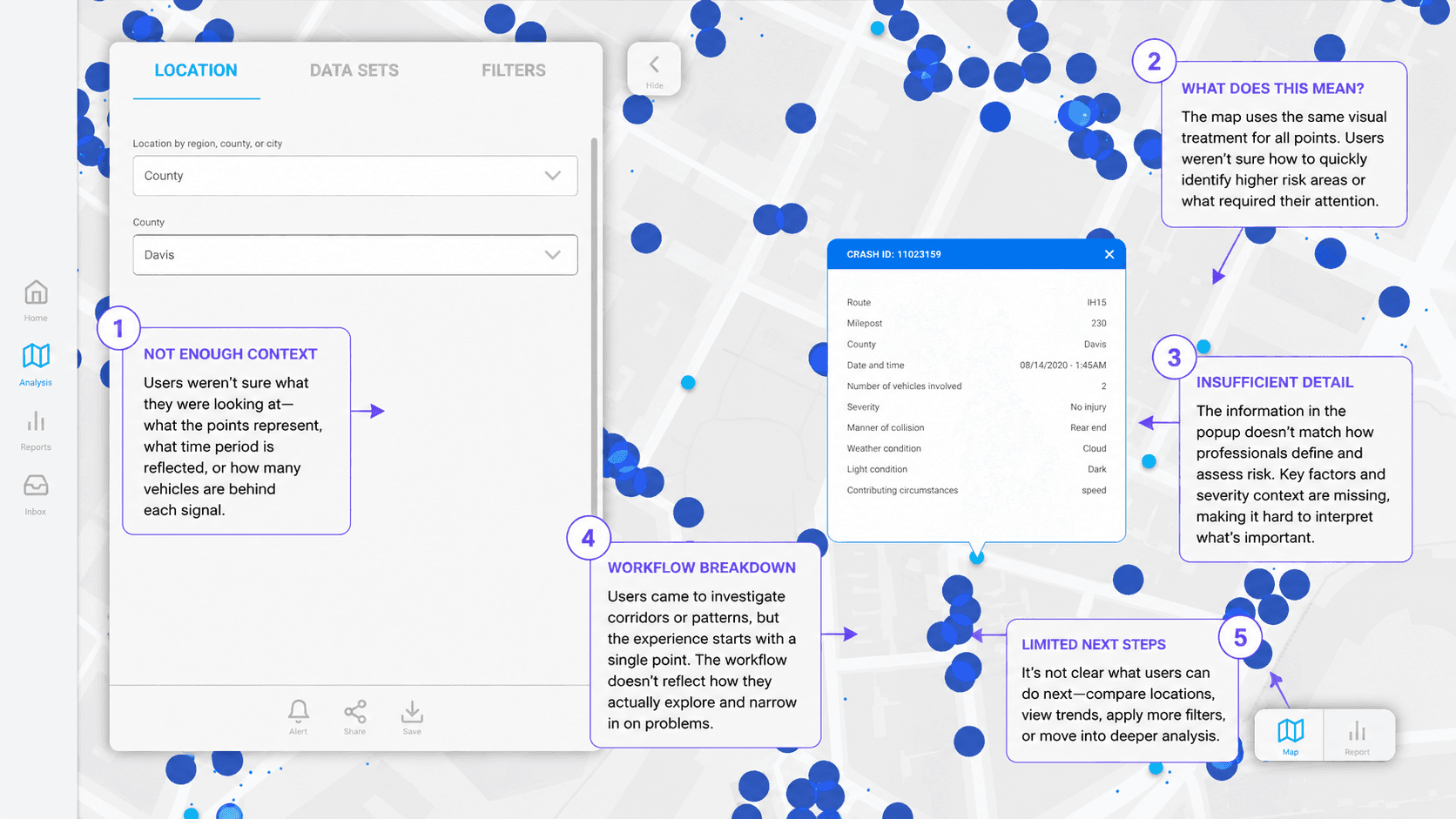
Prototype 01
We thought expert users needed high fidelity. We were wrong.
Because we were designing for technical professionals working with sophisticated data, we assumed they'd give better feedback on something that felt close to finished.
So we went high fidelity early.
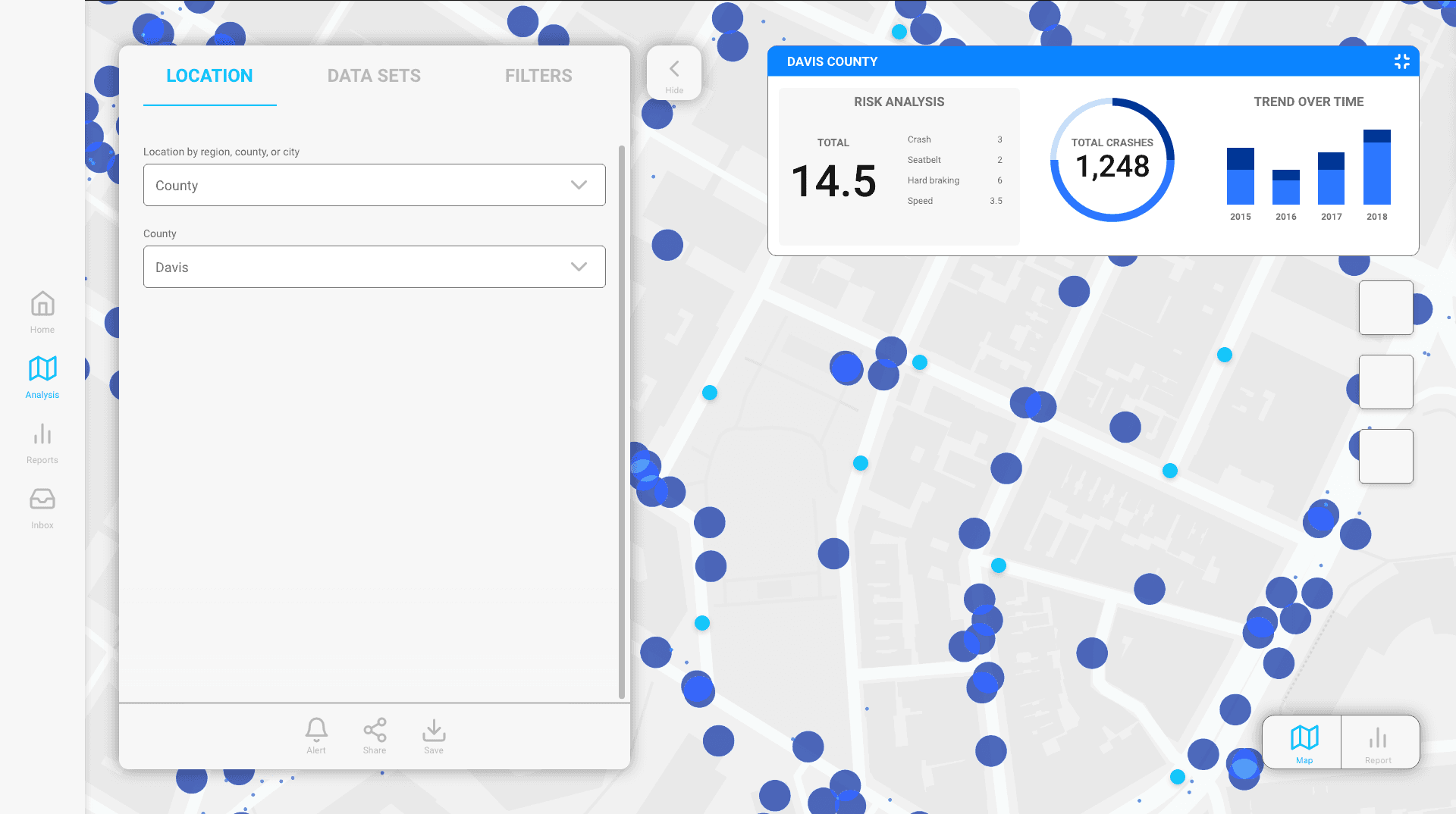
Users didn't just critique the interface. They challenged assumptions underneath it.
The data often lacked enough context to interpret confidently. Different personas approached the same information with different questions. And some workflows didn't reflect how people actually investigated roadway safety.
prototype 02
We redesigned around the questions users were actually trying to answer.
Rather than polishing the first prototype, we changed the experience based on what we'd learned and tested it again.
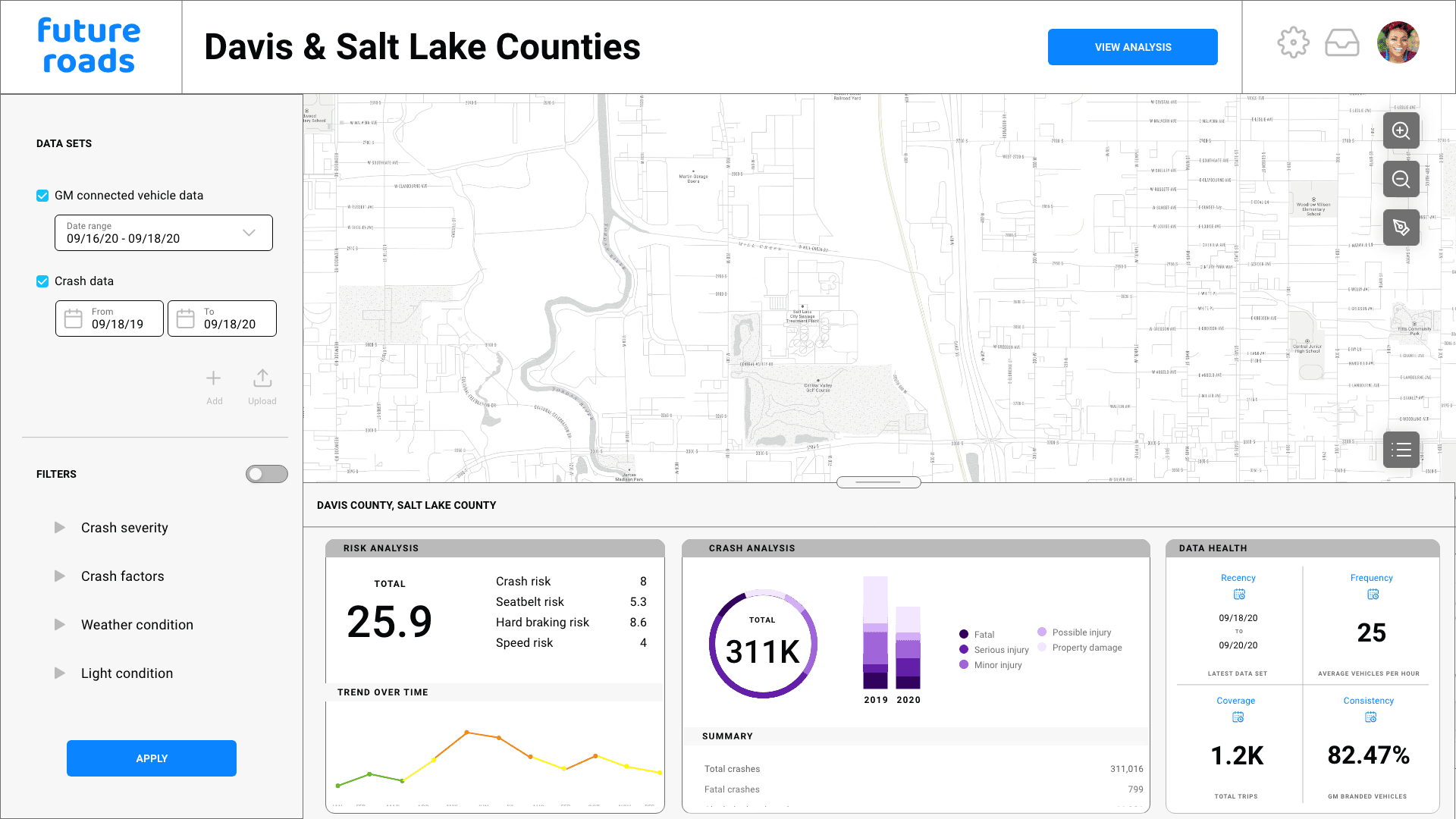
The second round surfaced three important tensions:
01 / More data didn't create more confidence.
Users needed context to understand what a metric represented and what they could reasonably conclude from it.
02 / Leadership and practitioners didn't always define value the same way.
UDOT leadership placed less emphasis on integration and workflow enablement than practitioners, who saw them as important to their day-to-day work.
03 / We supported investigation better than discovery.
Future Roads was increasingly useful when someone already knew where to look. But what if the product could help surface the roads that deserved attention in the first place?
what the research changed
We stopped thinking about Future Roads as one big dashboard.
Discovery, the design sprint, and two rounds of testing gave us a much clearer product direction.
Future Roads needed to support different users and modes of analysis, provide enough context to make complex data trustworthy, and let people move from broad signals into deeper evidence without overwhelming them.
Those findings became the foundation for the MVP I helped define next.

TURNING THE SIGNALS INTO A PRODUCT
Research gave us a direction. The next challenge was deciding what to build first.
By the end of discovery and prototype testing, we had learned a lot about transportation professionals, their workflows, and the potential of connected-vehicle data.
We also had a much bigger product idea than we could build all at once.
The next phase was about turning that possibility into a focused, buildable MVP: deciding which problems mattered most, what users needed first, and what engineering could realistically begin building.
My role shifted from exploring the opportunity to helping define the product, then designing it from the underlying workflows all the way through the interface.
01 / define the mvp
We had plenty of ideas. The harder question was what earned a place in version one.
I worked with Product, Data Science, Engineering, and Design to translate what we'd learned through research and prototype testing into a focused MVP.
We used story mapping to lay out the end-to-end experience, connect user needs to potential capabilities, and make the tradeoffs visible.
Together, we identified the tasks that were essential to the core experience, prioritized the features that delivered the most value, and pushed everything else beyond the first release.
This gave the team more than a feature list. It created a shared definition of what Future Roads needed to accomplish first.

02 / map the experience
The MVP told us what to build. User flows defined how it needed to work.
I translated the prioritized stories into end-to-end user flows, mapping how transportation professionals would move between the core tasks in the MVP.
That meant working through questions like: Where does someone enter the experience? How do they select a location or dataset? How do they move from a broad signal into deeper analysis? What happens when they change their question? And how do different workflows connect without forcing someone to start over?
The flows gave Product, Design, Data Science, and Engineering a shared model of the experience before we committed to individual screens.

03 / make it buildable
Low-fidelity design let us define the experience while engineering started underneath it.
With the MVP and core flows established, I moved into low-fidelity sketches and wireframes.
At this stage, the goal wasn't visual polish. It was giving enough definition to navigation, hierarchy, interactions, filters, data relationships, and system states that we could make decisions quickly and engineering could begin building the underlying infrastructure.
The wireframes became a bridge between the product vision and implementation, giving the team something concrete to discuss while keeping the interface flexible enough to change.


04 / build the visual system in parallel
While engineering built the foundation, I built the system the interface would need.
Once engineering had enough definition to begin backend development, I could work in parallel on the visual layer of Future Roads.
I developed the Future Roads brand and product identity, giving the emerging platform a visual language that could extend across the interface, prototypes, presentations, and other touchpoints.
At the same time, I created a reusable UI component library aligned with the U.S. Web Design System (USWDS). Instead of designing each screen independently, I established shared patterns for navigation, filters, inputs, cards, tables, controls, states, and other recurring interactions.
That gave us two things we hadn't had before: a recognizable product identity and a reusable set of rules for turning the wireframes into production-ready UI.


05 / turn the MVP into connected workspaces
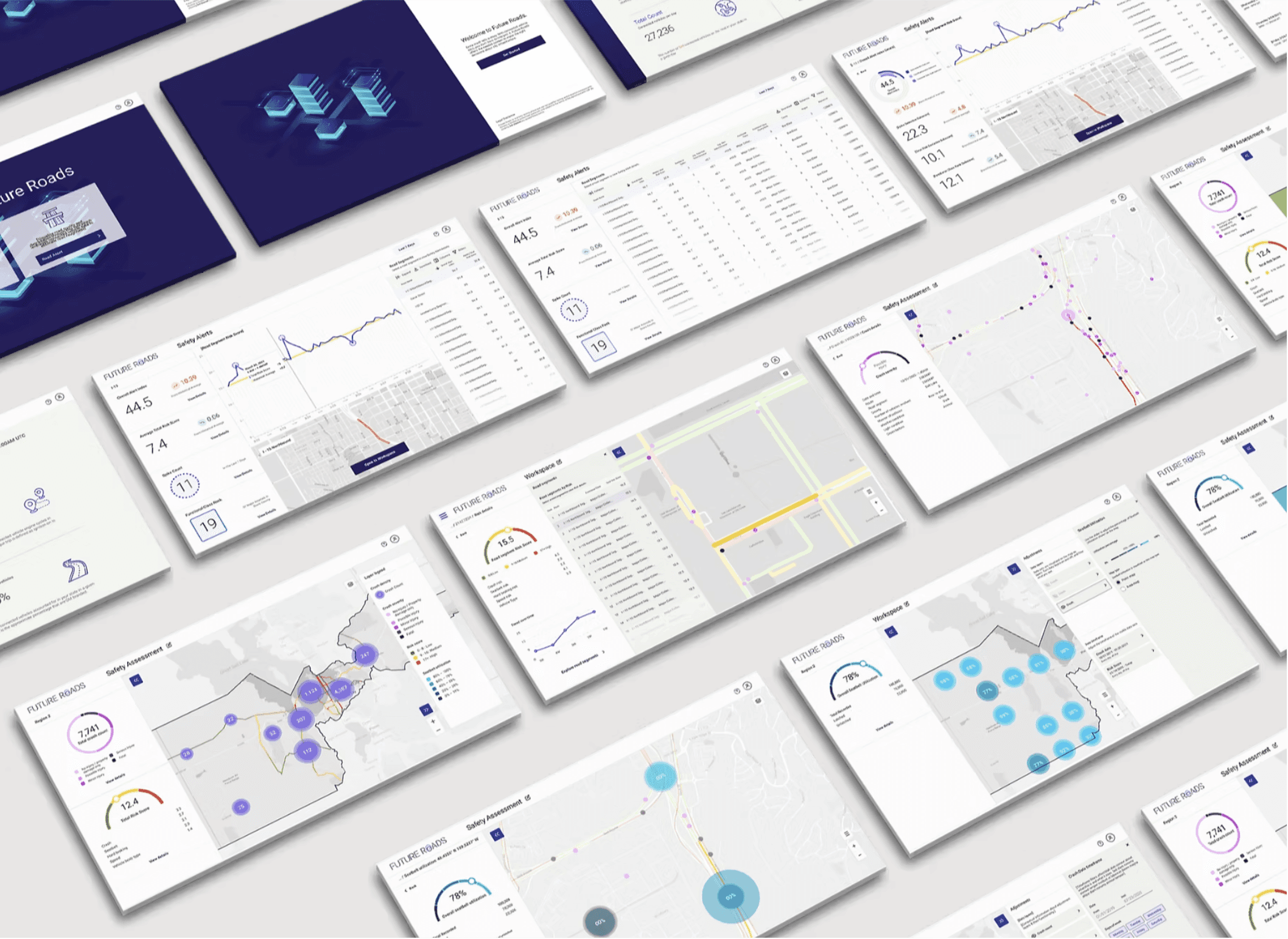
The product wasn't one dashboard. It was a set of tools for different kinds of work.
With the MVP defined, the backend taking shape, and a visual system in place, I moved into detailed interface design.
The research had shown that transportation professionals weren't performing one linear task. They moved between different modes of work: exploring broadly, investigating a particular question, examining detailed evidence, and preparing information for decisions.
I translated those needs into connected workspaces, each optimized for a different job while sharing the same underlying navigation, interaction patterns, and component system.
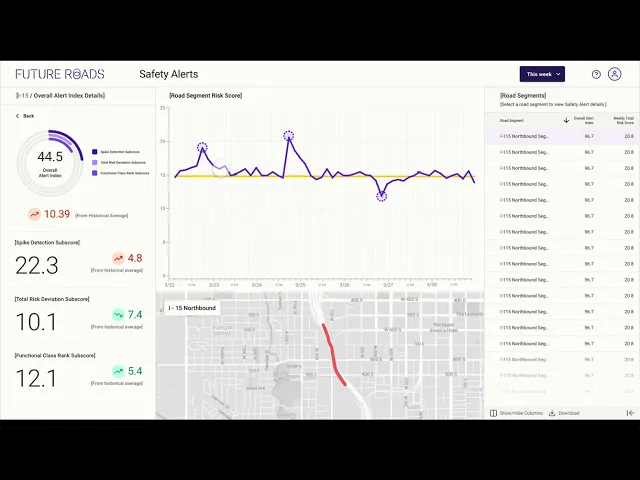
Safety alerts: Know where to look first.
Safety Alerts shifted the experience from requiring users to already know where a problem existed toward proactively surfacing areas that might need attention. Risk signals and high-risk road segments gave transportation professionals a starting point, with the ability to move from an alert into deeper analysis. The MVP included road-risk modeling and high-risk segment analysis and ranking, while custom alerts and notifications were planned as a post-MVP capability.
Discovery: Dig into what's happening and why.
Discovery gave users a flexible workspace for investigating a location or safety question in more detail. Users could query by location, explore crashes spatially on the map, review summary and individual crash data, and narrow the analysis by factors like severity, collision type, weather, lighting, crash factors, and time.
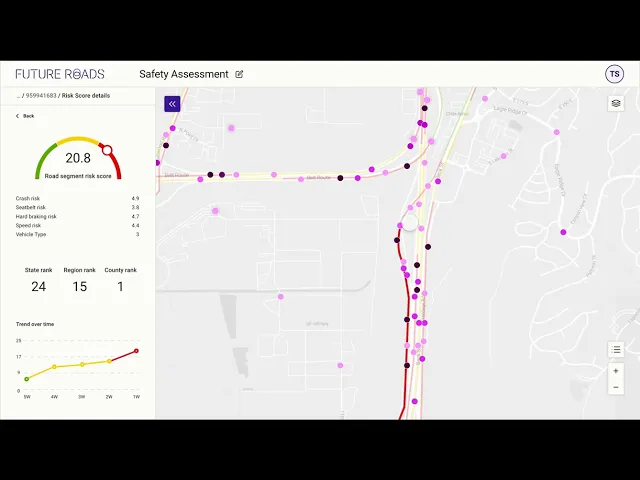
Together, the workspaces supported a more connected workflow: find where attention may be needed, then move into the evidence to understand why.
06 / launch the beta product
the launch was another experiment, not the finish line.
Future Roads launched as a live customer pilot with the Utah Department of Transportation, giving us the opportunity to see how the product performed in a real transportation environment.
We intentionally masked the GM brand so the experience could stand on its own, keeping the focus on the product's core functionality and unique value for transportation professionals.
Rather than treating beta as a finished product, we used the pilot to keep building, testing, and learning as we worked toward problem-solution fit.
2
Beta products
~15M
Connected vehicles in platform
National
GM + INRIX rollout
WHERE IT WENT
The experiment became something bigger.
Future Roads moved beyond its original innovation work.
Two beta products contributed to the platform that eventually became GM Future Roads Safety View, launched nationally through GM's partnership with INRIX.
The later platform brought together connected-vehicle and roadway information to help transportation agencies identify hazardous roadway segments, prioritize safety investments, evaluate Vision Zero initiatives, and support funding decisions.

LOOKING BACK
The lesson wasn't “test earlier.” It was knowing what you're testing.
Going high fidelity early wasn't inherently wrong.
Going high fidelity before we knew which questions required it was.
That's a distinction I carry into my work now.
I choose research methods based on the uncertainty we're trying to reduce. Sometimes that means a realistic prototype and a 60-minute moderated session. Sometimes it means putting a rough concept in front of people tomorrow. And during beta, I'd now create more opportunities for lightweight, unmoderated testing so smaller questions don't have to wait for a major research cycle.
Future Roads also changed how I think about complex products.
Giving someone access to more information isn't the same as helping them make a better decision.
Sometimes the most important design decision isn't figuring out how someone can explore the data.
It's recognizing that they shouldn't have to know where to look in the first place.